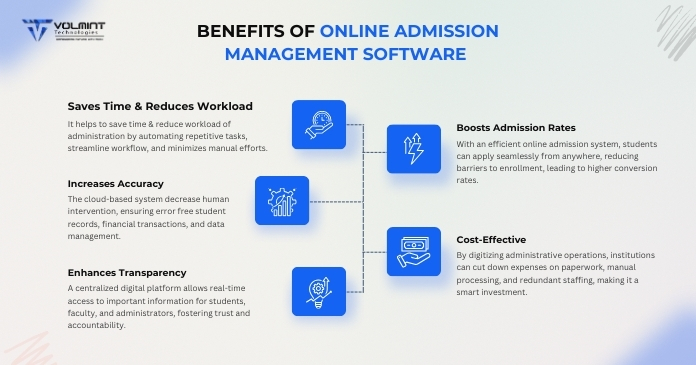
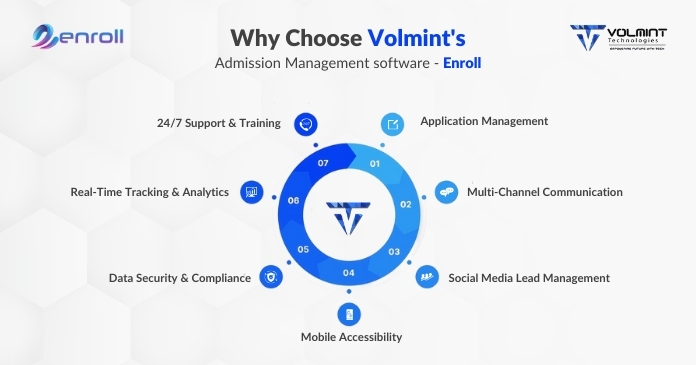
An admission management system is a cloud-based system that makes it easier for educational institutions to handle the admissions and student enrolling processes. Admission teams can use it to record student inquiries, verify their eligibility, follow up, gather documentation, and carry out several digital administrative activities.
In addition, AMS has other features too. Some of them are listed below.
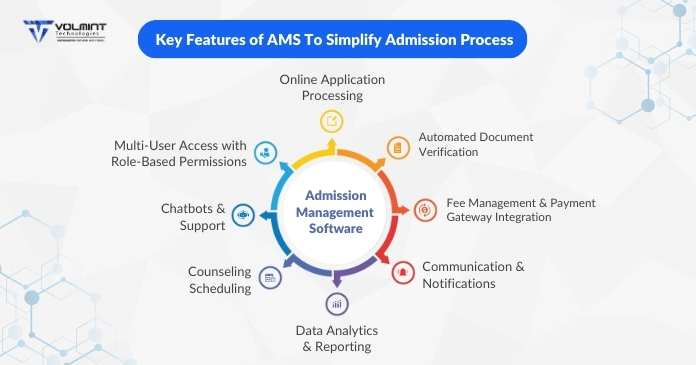
1. Online Application Processing
An online application portal allows students to apply from anywhere at any time. This feature eliminates the need for physical paperwork and long queues, making the process more efficient for both students and administrative staff. The system ensures that every application is recorded and managed systematically.
2. Automated Document Verification
Gone are the days of manually checking student credentials and verifying documents. With an admission management system, institutions can automatically verify submitted documents, ensuring they meet the eligibility criteria. This reduces the chances of errors, fraud, and delays in processing applications.
3. Fee Management & Payment Gateway Integration
Managing admission fees manually is cumbersome and prone to errors. The system provides a seamless payment gateway integration where students can pay their admission fees securely online using credit cards, debit cards, UPI, or net banking. Institutions can also automate the generation of invoices and receipts.
4. Communication & Notifications
Keeping applicants informed is crucial. With built-in SMS, email, and push notification functionalities, institutions can send real-time updates regarding application status, document verification, admission deadlines, and interview schedules. This improves communication and transparency.
5. Data Analytics & Reporting
An admission management system provides real-time insights into application trends, student demographics, and admission success rates. Institutions can generate reports to analyze the efficiency of their admission strategies and make data-driven improvements.
6. Counseling Scheduling
Many institutions require personal interviews or counseling sessions before granting admission. The system allows institutions to schedule interviews, send invitations, and manage interview slots efficiently. This ensures a smooth scheduling process without clashes or confusion.
7. Chatbots & Support
Applicants often have several queries during the admission process. AI-powered chatbots can assist them by answering frequently asked questions, guiding them through the application process, and providing 24/7 support. This reduces the dependency on staff and ensures timely assistance.
8. Multi-User Access with Role-Based Permissions
Different stakeholders within an institution require varying levels of access to the admission system. Role-based permissions allow administrators, admission officers, finance teams, and faculty members to access relevant data while maintaining security and confidentiality.