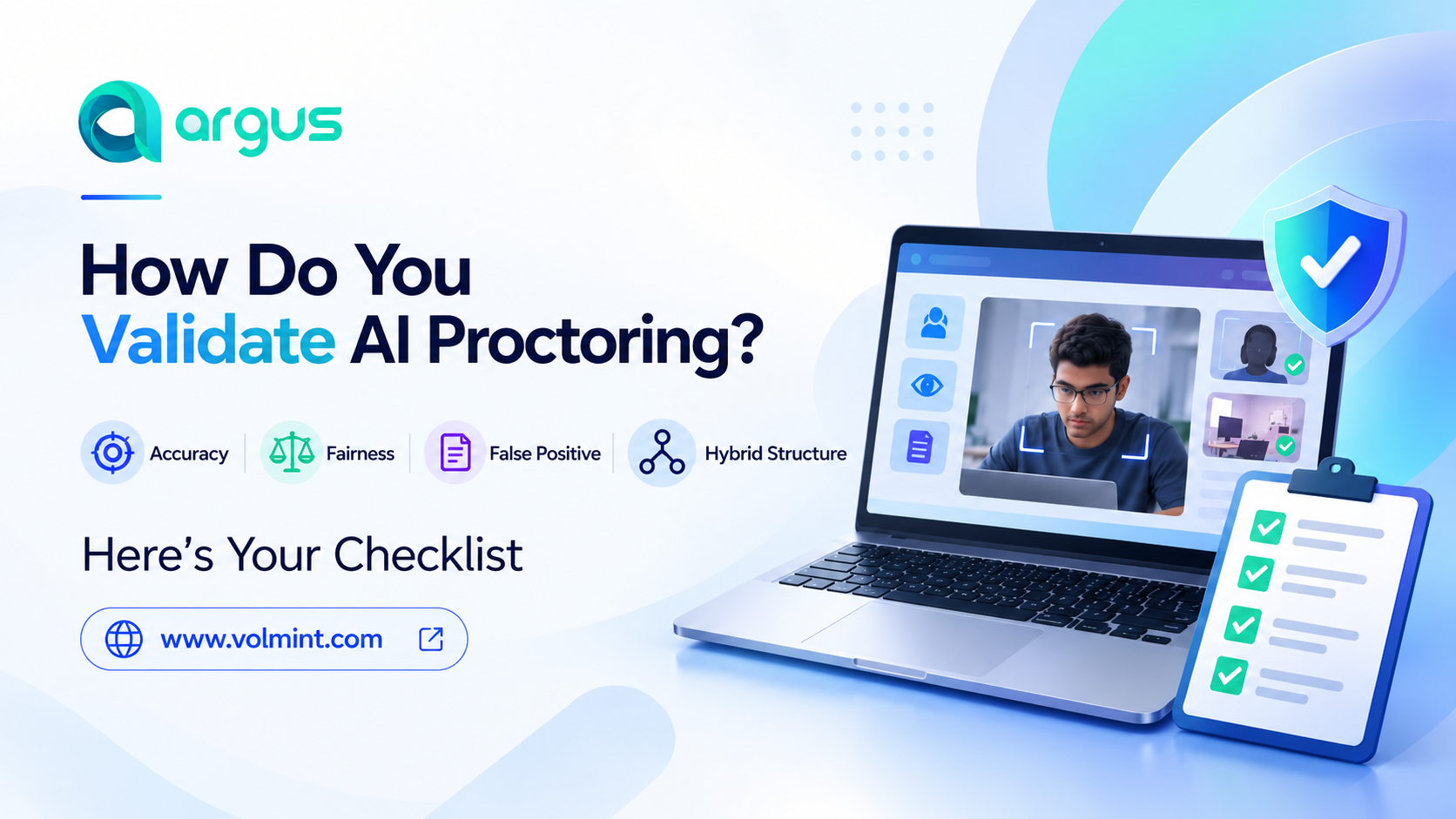
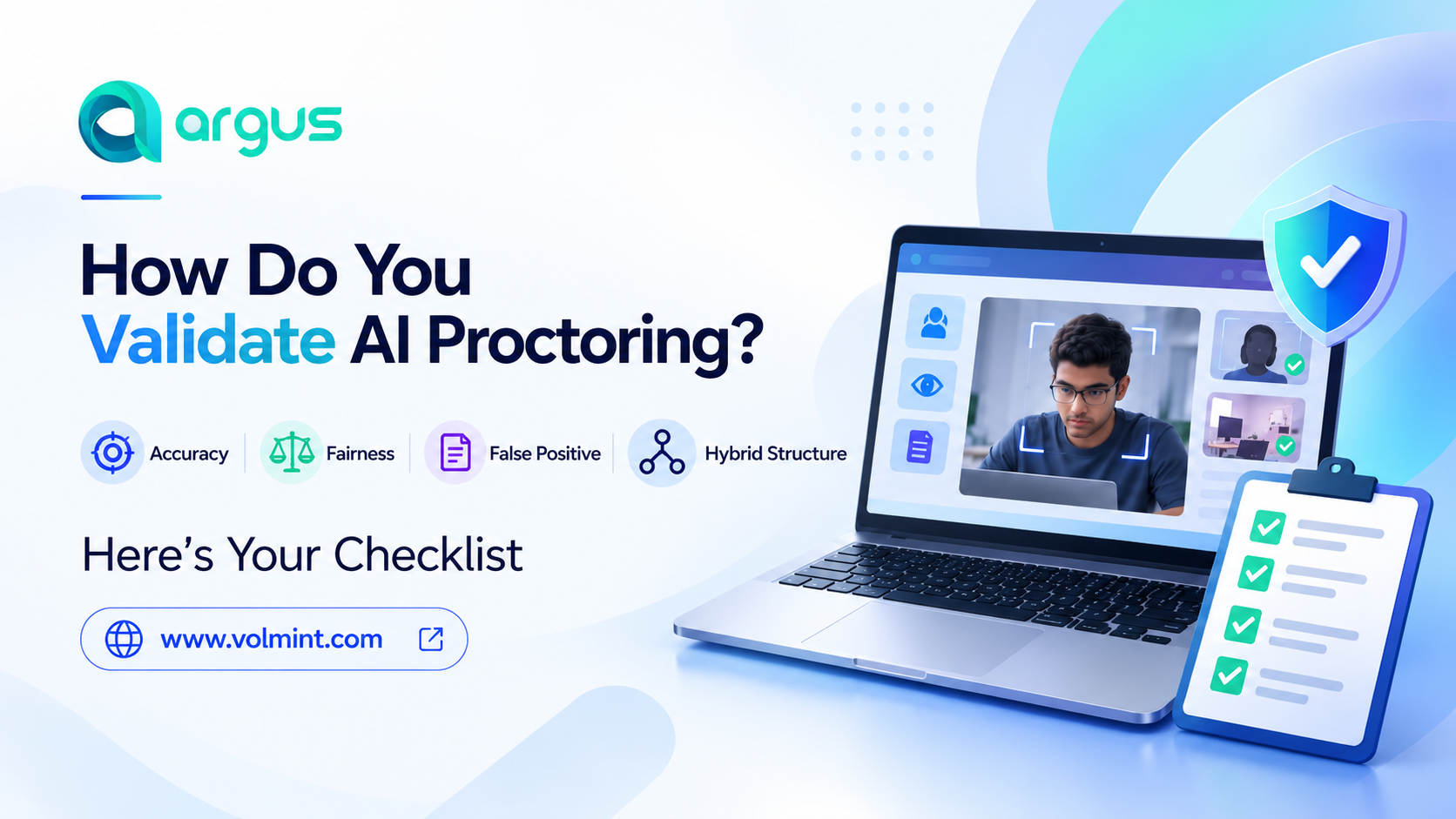
Institutions should ask about measurable accuracy, false positives and false negatives, test data, facial recognition, fairness, human oversight, privacy, and performance after deployment.
The following questions provide a practical framework for evaluating an AI proctoring solution.
|
How to Measure the Accuracy of the AI Proctoring System?
|
Check how accuracy is defined, measured, and verified during the online assessments. A single accuracy test may not be enough; the system may perform differently at the time of identity verification, face detection, and screening unusual activities.
|
|
What Is the False Positive Rate of the AI Proctoring Software?
|
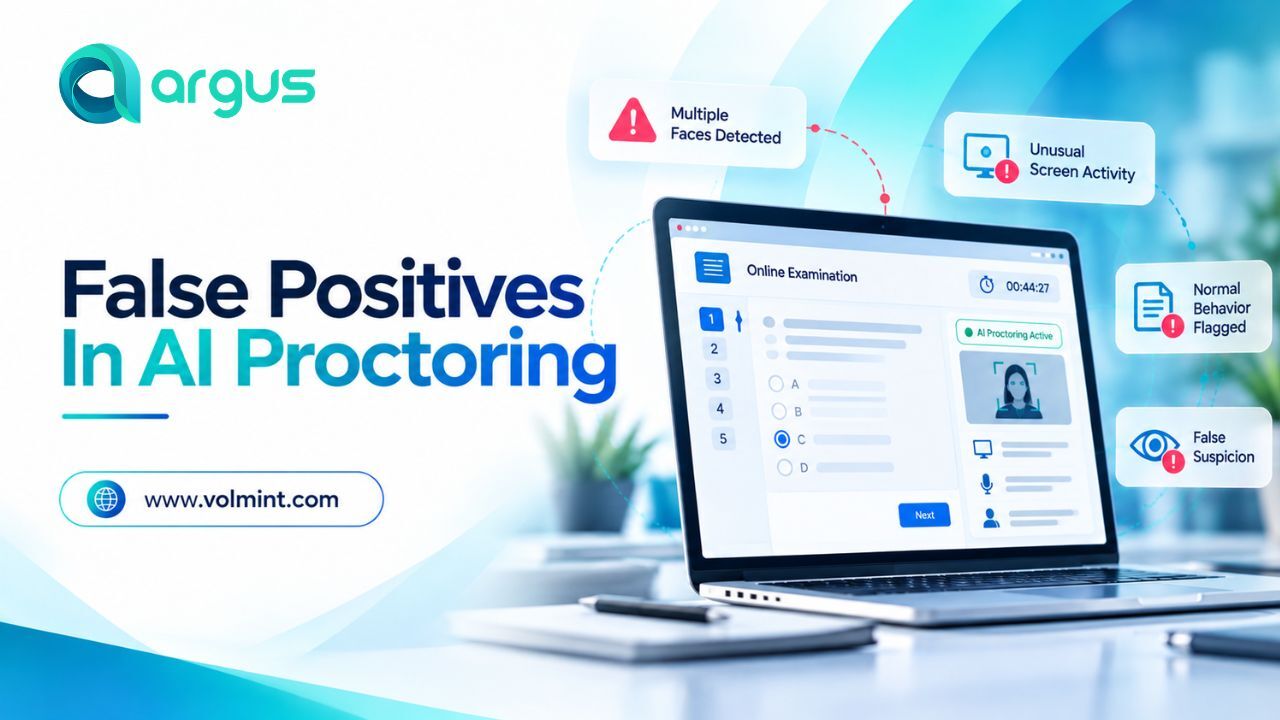
Sometimes AI may flag normal human behavior as a potential violation, known as false positives in AI. Check the false positive rate and its accuracy.
|
|
Does the system miss actual examination violations (False Negative)?
|
During the exam, AI may miss the actual violations and harm exam integrity, known as false negatives in AI proctoring. Do not forget to consider the false negative rate while validating a proctoring system.
|
|
Is the System Tested and Trusted?
|
AI proctoring software should be evaluated in conditions that resemble the environment in which it will actually be used. A controlled laboratory test ensures the software’s credibility and reliability.
|
|
Is the Identity Verification Feature Reliable?
|
Face recognition proctoring can help compare a candidate's live image with an enrolled reference image, but institutions should understand its operating limits before relying on it.
|
|
Has the system been evaluated for Bias?
|
AI proctoring validation should examine whether the system's performance differs across relevant candidate groups or testing conditions; this may include skin tone, camera quality, and other factors.
|
|
Does the System Offer AI+ Human Proctoring?
|
AI follows the defined parameters to verify, examine, and flag students during the process. However, human assistance will review the violation and make a fair decision to maintain decorum.
|
|
What Evidence Supports the Provider's AI Proctoring Validation Claims?
|
Checking how the system works and is tested properly is important when deciding. Marketing claims such as “highly accurate,” “advanced AI,” or “secure monitoring” are not substitutes for measurable evidence.
|
|
Does the system protect privacy and examination data?
|
AI proctoring may process sensitive information such as webcam footage, facial images, audio, identity records, screen activity, and examination logs. Institutions should understand what is collected, why it is collected, and how it is protected.
|
|
Is the System scalable?
|
A system that performs adequately in a small pilot may face different operational demands when thousands of candidates take examinations simultaneously. Ask how the provider tests concurrent sessions, monitoring responsiveness, report generation, system availability, and recovery from technical interruptions.
|
Conclusion
AI proctoring validation helps institutions understand what automated monitoring can reliably do, where it has limitations, and when human judgement is necessary.
Before choosing AI proctoring software, ask for evidence—not just features. A clear understanding of validation methods, limitations, and human oversight gives institutions a stronger foundation for making informed decisions about secure online assessments.