logo
HomeBlogs

Learning Management System: A Smart Solution for Today’s Learning Needs

Learning Management System: A Smart Solution for Today’s Learning Needs

In today’s flexible learning environment, institutions and organizations are turning to Learning Management Systems (LMS) to deliver education beyond traditional classrooms. An LMS learning management system simplifies online training, tracks progress, and enhances learner engagement. This powerful learning management platform enables seamless course management, remote access, and self-paced learning. With the right learning management software, schools, universities, and businesses can ensure efficient, organized, and impactful digital learning experiences for students and professionals alike.

Digital transformation has had a profound impact on education, just as it has reshaped various industries. The shift from traditional in-person classrooms to online and remote learning has completely redefined the way we teach and learn. This transformation has given rise to a learning management system that streamlines training operations.

Education isn’t limited to physical classrooms. Students now seek flexibility—balancing their studies with other responsibilities, enhancing their skills, and pursuing career opportunities on their own terms. Online training and development programs have become essential for learners who prefer to study at their own pace, regardless of location.

Managing classes and training programs manually, especially in remote or distance learning scenarios, can be complex and time-consuming. This is where technology plays a key role in simplifying and improving the learning experience.

A Learning Management System is an intuitive tool designed to offer seamless, flexible, and efficient digital learning solutions. Schools, universities, and organizations are increasingly adopting LMS to provide an experience that’s both effective and convenient.

Curious about how an LMS can transform the way we learn today? Scroll down to explore learning management system features and benefits, and see how they’re shaping the future of education while maintaining quality and engagement.

What is a Learning Management Software or LMS?

Let's begin with its core concept to truly understand the depth of a Learning Management System (LMS). An LMS is software designed to make learning simpler and more accessible for both educators and students, meeting the demands of today’s fast-paced world.

Here’s a quick breakdown of LMS:

Learning : Incorporates diverse media and interactive methods to cater to different learning styles when delivering online courses.

Management : Simplifies user and course management by automating processes, tracking progress, and managing enrollments.

System : A software platform that supports both online and offline training delivery while seamlessly integrating with other tools and systems.

At its essence, an LMS is a tool that organizes, delivers, and tracks learning experiences. Whether in schools, universities, or corporate environments, it empowers educators and administrators to manage courses, monitor progress, and evaluate performance—all in one centralized system.

An open source LMS can handle all types of content, including workshops, videos, audio, courses, and documents, making it versatile for various learning needs. While it’s widely used in education, many organizations also rely on corporate LMS platforms to provide employee training, ensuring professional growth without disrupting daily workflows.

Say goodbye to paper-based tracking, manual errors, and unnecessary delays. An LMS brings everything—courses, assignments, quizzes, and certifications—into one accessible and organized space, making learning efficient and hassle-free.
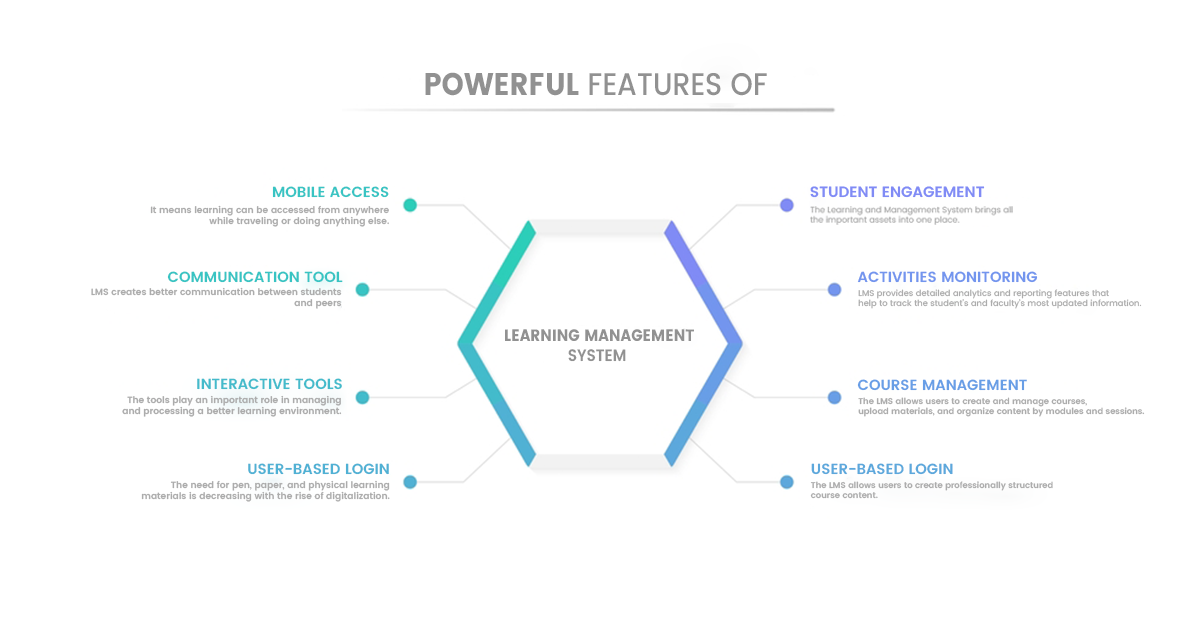
Top-Notch Features of Learning Management System

An LMS provides educators with the tools to design and deliver content effectively. It also enables them to track student information, including academic history, attendance, and more. Today, many organizations, government and non-government agencies, schools, and higher education institutions are adopting learning management platforms. These systems enhance training methods while saving both time and money through the convenience of technology.

With unique login credentials, faculty, administrators, and students can easily access the system to manage key elements such as syllabi, learning materials, assignments, certifications, and notifications. The platform’s flexibility allows users to access it from anywhere, eliminating the need for travel and making learning or training accessible and efficient.

An LMS comes packed with features and modules that simplify and enhance the teaching and learning experience, ensuring quality and content are never compromised. To help you make an informed choice, we’ve outlined some of the top features of a Learning Management System..

The Top Key Features of LMS:

However, the LMS features can vary from business to business. Yet many features, irrespective of the venture, are similar across the board.

1. Student Engagement:

The Learning and Management System brings all the important assets into one place. Faculty, administration, and students can communicate through numerous modes that increase the level of engagement that helps to create a better learning environment.

2. Activities Monitoring:

LMS provides detailed analytics and reporting features that help to track the student's and faculty’s most updated information. Whether, it's about accounts, classes, utilities, and more for better decision-making. The detailed and accurate reports help facilitators better understand gaps in user knowledge.

3. Course Management:

The LMS allows users to create and manage courses, upload materials, and organize content by modules and sessions. This enables instructors to create assignments and assessments for the students or learners, which are submittable or accessible easily.

4. User-Based Login:

The LMS allows users to create professionally structured course content. To maintain authenticity, the user-based login features allow different user to work as per their roles. The educators are allowed to add text, images, assignments, PDFs, and videos. This helps to manage what students can access, track, and oversee. The faculty can add students, modules, courses, and e-books.

5. Mobile Access:

LMS is an ERP software that provides easy access not only to a laptop or desktop but also through your mobile. It means learning can be accessed from anywhere while traveling or doing anything else.

6. Communication Tool:

Communication is the biggest barrier for online learners. LMS creates better communication between students and peers through numerous tools such as direct messages, chats, and forums. A seamless communication enables a more approaching learning environment and engagement.

7. Interactive Tools:

The tools play an important role in managing and processing a better learning environment. It offers an integration of third-party tools along with numerous accessibility such as videoconferencing, audio lectures, SMS, and book management.

8. E-Library:

The need for pen, paper, and physical learning materials is decreasing with the rise of digitalization. The E-books become the need of the day. Managing and overseeing E-library features helps administrators and students track their borrowings.

Why Implementing a Learning Management System is Important?

With the shift to modern technology in education, many organizations find it challenging to stay efficient using outdated systems or manual processes. These approaches often result in inaccurate data, delays in decision-making, and unnecessary time and resource expenses.

Adopting a Learning Management System (LMS) addresses these challenges by making learning accessible anytime and anywhere. It keeps everything—courses, progress, and assessments—centralized and organized. With user-friendly tools and seamless tracking, an LMS simplifies teaching, streamlines learning, and helps learners stay on track with their goals. For businesses and educational institutions alike, it’s a practical and effective solution for fostering growth and achieving success.

What are the Benefits of an LMS?

While talking about “LMS,” ignoring its advantages is not worth it! Both educators and students can benefit greatly from using an LMS to conduct training and learning programs. Let’s discuss about the benefits of a Learning and Management System.

Reducing The Expense of Training : Implementing an LMS helps to down the cost of in-person training. Moreover, it allows the users to learn anywhere, at any time. This means, no need to pay for the sessions again and again for the same training. Thus, LMS helps to achieve greater success at a lower cost.

Customization : The flexibility of an LMS allows courses to be tailored to individual learning styles, making learning more effective.

Up-To-Date Content : By keeping the course up to date, an LMS puts you at the forefront of your field. Unlike training manuals, online courses may be updated with a few clicks anytime new information is needed.

Time Efficiency : An LMS saves time by automating administrative tasks like grading, course enrollment, and tracking completion, giving instructors more time to focus on what matters most—teaching.

Centralized Information : Everything from course content to grading is stored in one system. This makes it easy for both learners and educators to stay organized and keep track of progress.

How Does the Learning Management System Work?

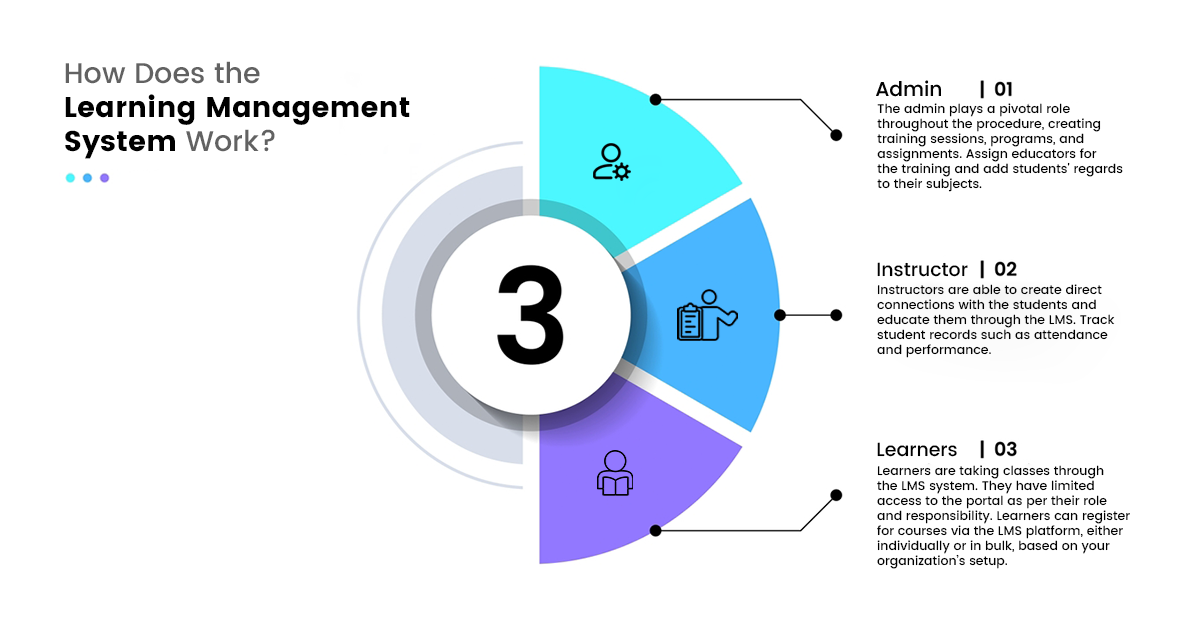
Whenever we are using an App or Software, we need to interact with the interface first to use it, an LMS is no different. The system has three interfaces, which differ according to the users.

Admin : The admin plays a pivotal role throughout the procedure, creating training sessions, programs, and assignments. Assign educators for the training and add students' regards to their subjects.

Instructor : Instructors are able to create direct connections with the students and educate them through the LMS. Track student records such as attendance and performance.

Learners : Learners are taking classes through the LMS system. They have limited access to the portal as per their role and responsibility. Learners can register for courses via the LMS platform, either individually or in bulk, based on your organization’s setup.

The LMS tracks each learner’s progress, from the completion of individual lessons to overall course completion. This allows instructors to monitor performance in real-time and offer support as needed.

How To Choose A New Learning Management System?

Choosing the right LMS for your school or organization? Keep these points in mind:

Ease of Use : Look for a system that's simple and user-friendly for teachers and students alike.

Scalability : Pick an LMS that grows with your needs, whether you’re a small institute or a large organization.

Integration : Ensure it works well with other tools like student management systems and communication apps.

Security : Data protection is a must—make sure your LMS keeps information safe.

Support : Reliable customer service is key for quick solutions to any issues.

A good LMS makes education seamless and future-ready!

Who Needs LMS Learning Management System?

Learning is the best way to keep growing not only in the professional world but also in personal lives. Also, acquiring new skills and knowledge helps individuals to stay competitive in this ever-evolving world. Thus, learning management platforms have become the need of the day to train not only students but working professionals too. Nowadays, many well-known educational institutes and corporate industries encourage LMS for their training and development programs. An LMS is essential for:

Educational Institutions : Schools, colleges, and universities use LMS to manage courses, track student progress, and offer flexible learning options.

Corporate Organizations : Companies rely on LMS for employee training, onboarding, compliance programs, and skill development.

Online Course Creators : Individual educators or businesses offering e-learning courses can use LMS to deliver and manage content effectively.

Non-Profit Organizations : NGOs utilize LMS to train volunteers, conduct workshops, and spread awareness through educational programs.

Government Agencies : Public sector institutions use LMS for staff training and professional development.

Healthcare and Medical Training Centers : Hospitals and medical institutes use LMS for training healthcare professionals, updating skills, and compliance tracking.

Freelancers and Coaches : Independent trainers and coaches use LMS to create and sell courses tailored to their audience.

In short, LMS is ideal for anyone who needs to organize, deliver, and track learning experiences efficiently.

Tips to Choose the Best Learning Management Platform

As LMS becomes an important tool for managing and controlling the educational landscape for tutors as well as learners, targeting the right software is crucial. Here, we have mentioned some basic tips to go through before choosing your LMS.

1. Understand Your Needs

First, think out your organization’s goals and requirements. Ask a question to yourself if you need an LMS for online classes, corporate training, or education only. Do proper research and narrow down your options.

2. User-Friendly Interface

Opt for a platform that is simple and user-friendly along with important modules and sections. An easy-to-navigate dashboard and intuitive design ensure a better user experience for the administration and students.

3. Customization Options

Every business has its unique voice. Ensure that the LMS you have chosen is aligned with your specific needs and workflow.

4. Mobile Compatibility

A multi-device facility is the demand of every user in the current scenario. Thus, choose the software that provides :

5. Content Management and Delivery

Opt for an LMS that allows you to seamlessly upload, organize, and deliver diverse content formats like videos, PDFs, and quizzes.

6. Integration Capabilities

Verify if the platform integrates well with tools you already use, such as CRMs, HR software, or virtual classrooms.

7. Analytics and Reporting

Select an LMS with robust analytics to track learner progress, course performance, and overall system efficiency.

8. Scalability

Choose a platform that grows with your needs. It should be able to handle increasing users, courses, and features as your organization expands.

9. Customer Support

Look for platforms that offer reliable customer service, including live chat, email support, and training resources.

10. Cost and ROI

Evaluate the pricing model and ensure it aligns with your budget while delivering long-term value through improved efficiency and learning outcomes.

By keeping these tips in mind, you can find an LMS that fits your needs and enhances the learning experience.

The Best LMS Learning and Management System available in The Market

There are countless examples of effective Learning Management System (LMS) platforms in higher education and business training, whether open-source or cloud-based solutions. The right LMS can transform your learning process by offering a unified approach to training, measurable returns on investment, and a streamlined onboarding experience for both students and employees.

Volmint’s Learning Management System stands out as a trusted open-source platform, designed to provide a seamless learning experience for administrators, educators, and learners alike. Tailored to meet the unique requirements of your institution, it integrates real-time data, timely notifications, and automated processes. It serves as an all-in-one solution for training, development, and onboarding programs, ensuring efficiency and effectiveness at every step.

Why Choose Volmint’s LMS?

Volmint Technologies is one of the fastest-growing IT companies in India. With expertise in the education and training landscape, it crafted solutions that provide the best support to businesses. Volmint’s Learning Management System offers an intuitive interface, seamless integration with other tools, and robust features that are perfect for educational institutions and businesses alike.

Customizable : Tailor the system to your specific needs, whether you’re a school, university, or business.

Scalable : Our LMS grows with your organization, handling anything from small groups to thousands of users.

User-Friendly : Designed for both learners and instructors, making it easy to use without a steep learning curve.

Comprehensive Support : Our dedicated customer support team ensures you get the most out of our LMS platform.

Affordable Cost : Volmint’s products are cost-effective, secure, and reliable which makes us the first choice of our valuable customers.

Some Extra Benefits With Volmint’s LMS with No Extra Cost

  • Lifetime Free Maintenance
  • Personalized Assistance
  • Lifetime Free Maintenance Updates
  • Discounts on Extra Modules
  • Feedback and Feature Request
  • Third-Party Tool Integration
  • Consultation and Best Practices
  • Training Sessions
  • Resolution within 48 hours
  • Free Server

Conclusion

In today’s ever-changing landscape of education and training, a Learning Management System has become an essential tool for success. It simplifies the learning process, making it more accessible, efficient, and impactful for both learners and educators.

Volmint’s LMS is thoughtfully designed to cater to the needs of modern institutions and organizations, offering a comprehensive solution that enhances the learning experience. Whether you’re a school, university, or business, Volmint’s LMS empowers you to create smarter, more effective learning environments that truly make a difference.

More Blogs

Contact Volmint Technologies

Let's Connect for Technological Brilliance

Reach Out to Volmint Technologies Today and Unleash the Power of Customized Solutions Tailored to Elevate Your Business.

Contact Us
Footer Background Circle
Volmint Technologies | Learning Management System: A Smart Solution for Today’s Learning Needs