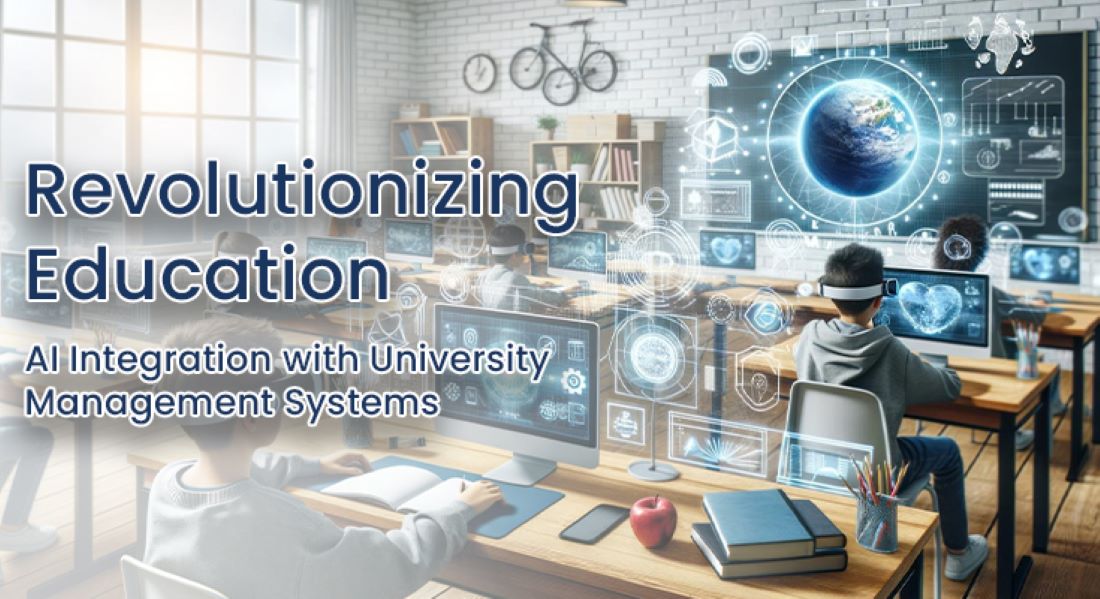
The AI-integrated university management system provides a user-friendly experience with minimum manual work to eliminate any type of miscommunication. The integration of AI in UMS increases efficiency, data security, etc., which makes the software more and more appropriate for the students as well as the teachers.
: Enhancing Administrative Efficiency
Automating Administrative Tasks
-
AI-powered chatbots and virtual assistants are handling routine inquiries from students and staff, reducing the burden on administrative staff and providing quick responses to common questions.
Streamlining Admissions and Enrollment
-
AI algorithms analyzing applicant data to identify promising candidates and streamline the admissions process. Chatbots guide prospective students through enrollment procedures.
Improving Financial Management
–
AI assists in budgeting forecasting, expense tracking, and identifying cost-saving opportunities, helping universities allocate resources more effectively.
Optimizing Resource Allocation
-
AI-driven algorithms analyze usage patterns to optimize the allocation of classrooms, laboratories, and other resources, reducing scheduling conflicts and improving resource utilization.
: Enhancing Learning and Teaching
Personalized Learning Experiences
-
AI creates customized learning paths based on individual student performance and preferences, also ensuring that each student receives the support and challenges they need.
Intelligent Tutoring Systems
-
AI-powered tutoring systems provide students with immediate feedback and additional resources to enhance their understanding of course material.
Adaptive Assessment and Grading
-
AI adapts assessments to students' skill levels and provides automated grading, reducing the workload on instructors and ensuring fair evaluations.
Supporting Teachers and Instructors
-
AI tools are assisting educators by offering data insights on student performance, recommending teaching strategies, and automating administrative tasks.
: Data-Driven Decision Making
Predictive Analytics for Student Success
-
AI predicts student outcomes and identifies factors that contribute to success or dropout risk, enabling universities to intervene early and provide targeted support.
Institutional Planning and Strategy
-
AI-driven data analysis informs strategic planning, helping universities set goals, allocate resources, and adapt to changing educational landscapes.
Alumni Engagement and Fundraising
-
AI helps universities build and maintain relationships with alumni by personalizing communications, identifying potential donors, and optimizing fundraising efforts.