logo
HomeBlogs

How a Hybrid Proctoring Workflow Can Be Evaluated

How a Hybrid Proctoring Workflow Can Be Evaluated

Learn how universities and certification bodies can evaluate hybrid proctoring workflows through realistic testing, AI detection metrics, human review consistency, technical reliability, candidate fairness, and appeal outcomes. Discover how ongoing monitoring helps improve online exam integrity and support evidence-based decisions.

How a Hybrid Proctoring Workflow Can Be Evaluated

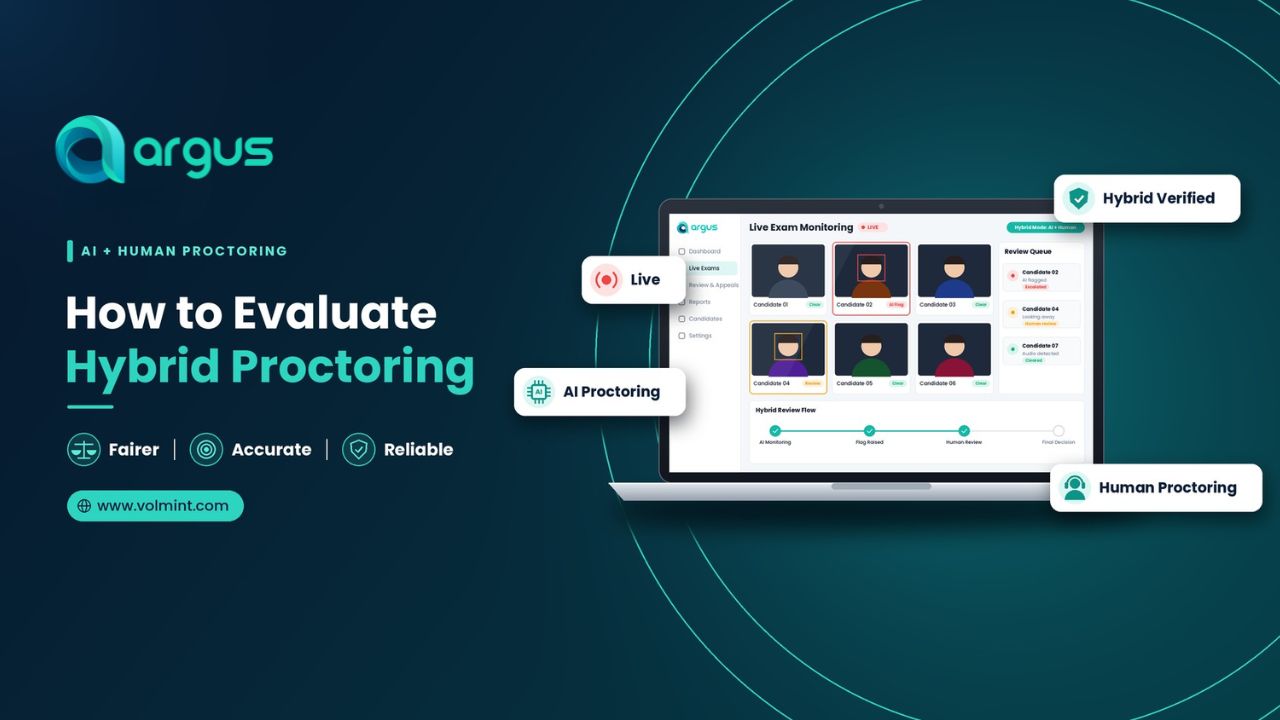
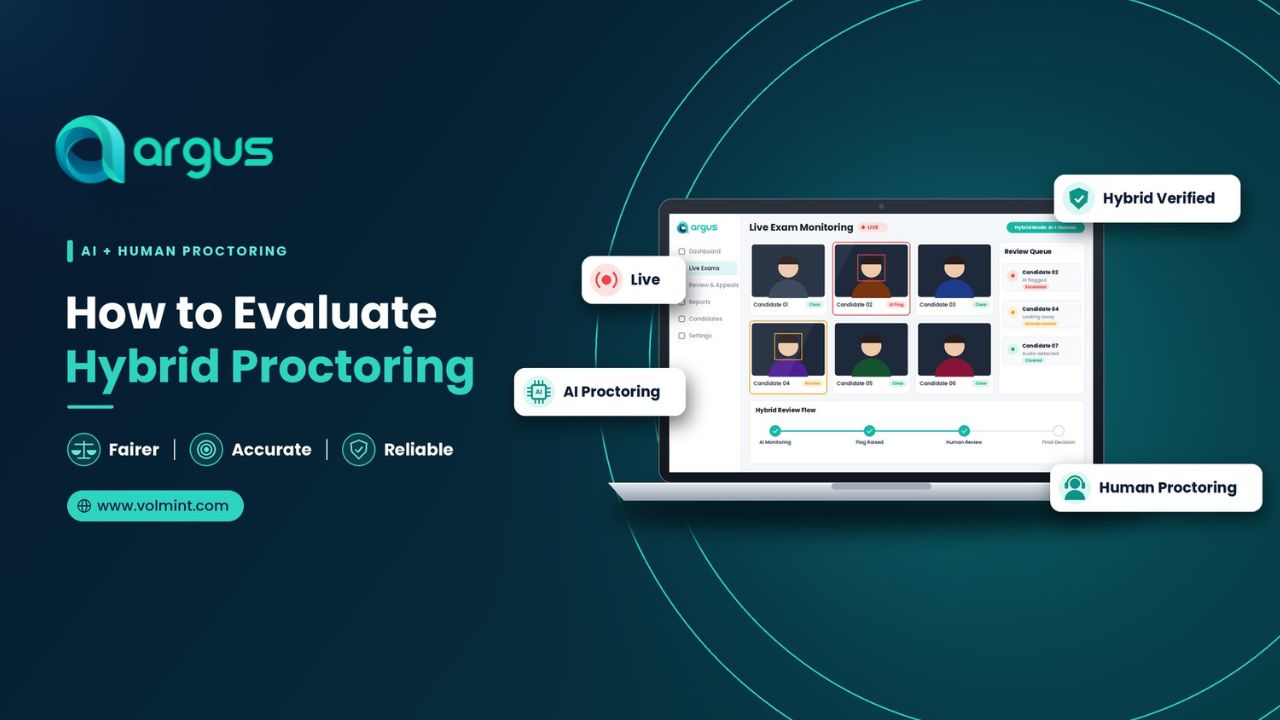
Hybrid proctoring combines AI-assisted monitoring with human supervision to provide high accuracy and maintain exam integrity. During the online assessment, AI exam monitoring uses artificial intelligence and similar technologies to detect suspicious activities and raise alerts. The human proctor can evaluate the event with available evidence, examine the context, and decide what action should be taken.

A hybrid online exam proctoring workflow should be evaluated on more than how many flags it generates. Universities and certification bodies should measure detection performance, false positives & negatives, review consistency, response time, candidate experience, and the quality of final decisions.
What is a Hybrid Proctoring Workflow?

A Hybrid Proctoring Model combines AI-based automated monitoring with human oversight. The exact process may vary based on the chosen online proctoring software, but commonly it includes:

  • Candidate Verification: Using the authorized student data, AI helps to verify student identity to verify the registered candidate is taking the exam.
  • AI-Assisted Monitoring – Using supportive signals such as webcam and microphone, the system detects unusual activities that include facial expressions, multiple faces on one screen, unauthorized audio, browsing activities, and more.
  • Alert Generation – Events that meet configured criteria are flagged or recorded for further review/assistance.
  • Human Reviewer – Based on the available evidence, a human proctor will understand the event and its context to evaluate the situation, enabling making fair decision.
  • Decision & Documentation - The institution follows its exam rules, records the outcome, and provides an appropriate route for raising concerns.

Remember that not every alert requires human intervention and not every flag is a potential violation. For exam-conducting institutions, the workflow should distinguish technical problems, inconclusive evidence, and substantiated rule violations rather than treating all alerts alike.

Which Metrics Should Be Used To Evaluate Hybrid Proctoring?

To know how effective your AI proctoring software is, institutions can’t rely on a single metric. They must evaluate several factors, such as the AI component, human review process, and end-to-end outcome.

Metric

When it measures

Why is matters

Precision

The proportion of flagged events that are confirmed as relevant under the review criteria

Shows how many alerts are useful rather than false alarms

Recall

The proportion of known relevant incidents that the system detects

Helps identify incidents the workflow may miss

False Positives in AI

How often legitimate activity is incorrectly flagged

Indicates unnecessary alerts and review burden

Review Turnaround Time

Time between an alert and its review or resolution

Shows whether the workflow can handle cases promptly

Reviewer Agreement

How consistently different reviewers assess the same evidence

Helps identify unclear policies or inconsistent decisions

Technical Failure Rate

How often monitoring or evidence capture fails

Highlights reliability problems that may undermine decisions

Candidate Appeal Outcomes

How often decisions change after a challenge or appeal

How often decisions change after a challenge or appeal


How Can Institutions Test a Hybrid Proctoring Workflow?

A structured evaluation should test the complete process rather than assessing the AI model in isolation.

  • Define what counts as a violation – The institutions must document the exam rules, behavior, incidents, and other factors that must be identified during the process. Also, separate rules for technical issues, ambiguous behavior, and authorized activities.
  • Test Realistic Exam Scenarios – Run a controlled test that contains all the legitimate and prohibited activities, including normal human behavior, technical difficulties, lighting changes, webcam interruptions, background, potential violations, and more.
  • Compare AI Alerts - Use trained reviewers to assess a representative set of test sessions against documented criteria. Where feasible, have more than one reviewer independently assess selected cases, then investigate disagreements.
  • Evaluate Human Review Process - Measure how long reviews take, whether reviewers reach consistent conclusions, how often cases need escalation, and whether decisions are supported by the available evidence.
  • Check Fairness - Where appropriate and lawful, evaluate whether error rates differ across relevant candidate groups or testing conditions. Check whether candidates can access the required technology, understand the instructions, and request reasonable accommodations.
  • Monitor Performance After Deployment - A successful pre-launch test is not enough. Continue tracking false positives, missed incidents, technical failures, review times, and appeal outcomes after deployment.

How Can Institutions Tell Whether a Hybrid Workflow Is Working?

To create a responsive online exam environment and check and ensure the proctoring workflow, look at the below-mentioned indicators.

  • Relevant incidents are identified using clearly defined criteria.
  • False positives and negatives are measured accurately.
  • Human proctors have the authority to review enough evidence.
  • Similar cases receive consistent treatment.
  • Technical issues are treated separately and not as misconduct
  • Candidates should clearly understand the process.
  • Performance and privacy risks are reviewed regularly.

Conclusion

Evaluating a hybrid proctoring workflow requires more than checking whether AI can detect unusual activity. Institutions need to assess how alerts are generated, how humans review them, how decisions are documented, and how errors are identified and corrected.

A reliable evaluation combines measurable performance indicators, realistic testing, consistent reviewer training, privacy safeguards, and ongoing monitoring. This helps universities, certification providers, and recruitment teams make evidence-based decisions about their online exam monitoring processes.

Frequently Asked Questions

More Blogs

Contact Volmint Technologies

Let's Connect for Technological Brilliance

Reach Out to Volmint Technologies Today and Unleash the Power of Customized Solutions Tailored to Elevate Your Business.

Contact Us
Footer Background Circle
How to Evaluate a Hybrid Proctoring Workflow: Key Metrics