logo
HomeBlogs

What Is AI Exam Monitoring? Signals, Review, and Limits

What Is AI Exam Monitoring? Signals, Review, and Limits

Discover how AI exam monitoring supports online assessments through identity verification, face detection, audio monitoring, and activity alerts. Explore its workflow, the role of human reviewers, and key limitations involving accuracy, privacy, accessibility, and technical issues.

What Is AI Exam Monitoring? Signals, Review, and Limits

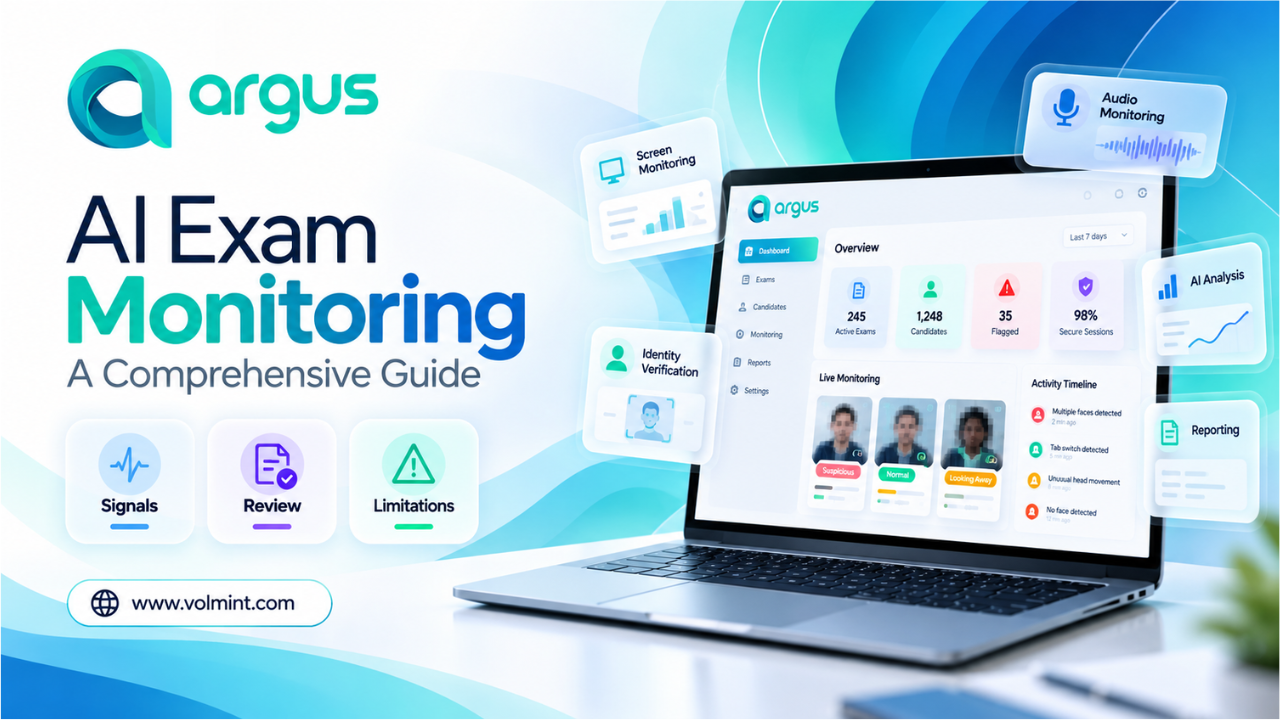
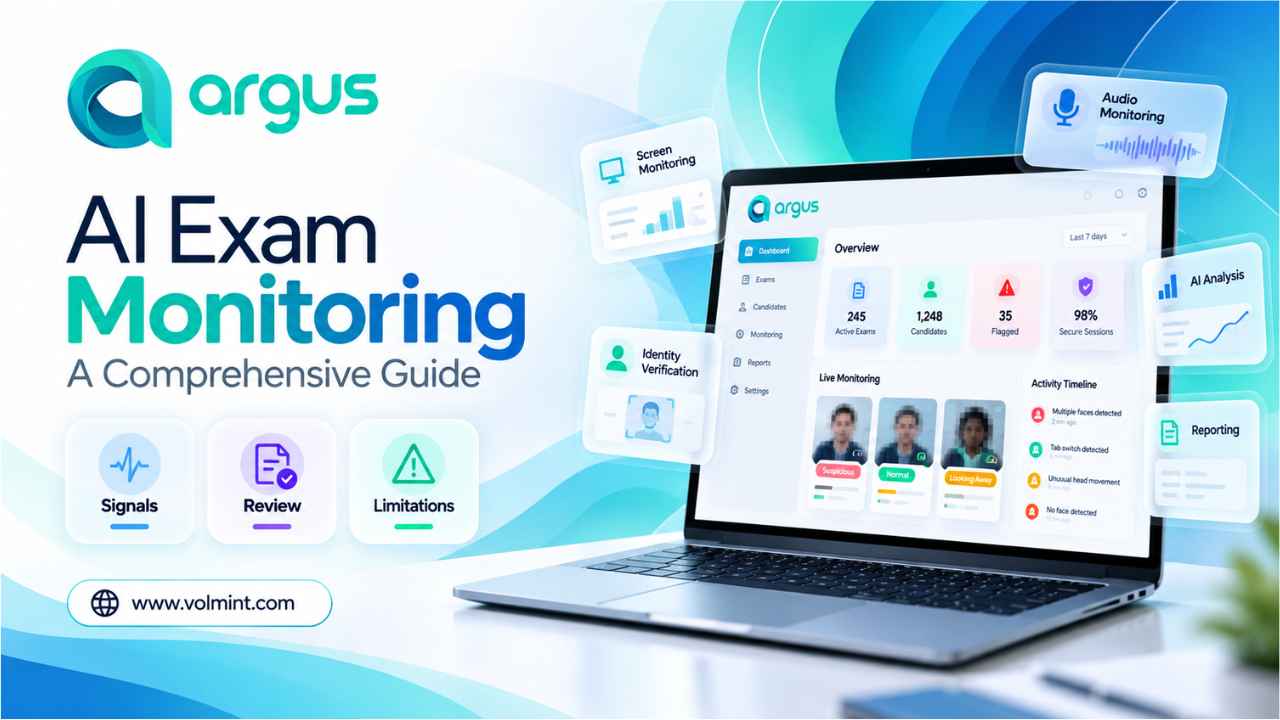
AI Exam Monitoring, also known as AI proctoring, uses artificial intelligence and similar technologies to supervise online assessments with or without direct human intervention. AI proctoring software is becoming essential for educational institutions and professional certificate providers that conduct online examinations for learners in different locations and want to maintain exam integrity and security.

During assessments, AI-powered exam monitoring software analyzes selected signals to detect and flag suspicious activity and maintain fairness. It also helps verify identity and triggers a human invigilator to review and take necessary action based on predefined parameters.

Understanding what the technology observes, how it assesses alerts, and where its limitations lie is essential when selecting online exam software or designing a fair remote examination process.

What is AI Exam Monitoring?

AI Exam Monitoring is the use of artificial intelligence to analyze examination-related signals and flag events that may need further investigation during online assessments. Based on the chosen online exam software, it can support candidate identity verification, face monitoring, and suspicious activity detection.

Unlike traditional invigilation, where human observers are supposed to view each student thoroughly, AI-based monitoring minimizes the workload while enhancing accuracy by analyzing student behavior automatically.

The AI Exam Monitoring workflow includes four stages:

Step 1: Capture: By utilizing webcam images and activity data, the system captures students’ behavior and verifies their identity, ensuring online exam integrity.

Step 2: Analyze: AI models supported by signals that include webcam, facial presence, audio events, and more monitor students based on predefined detection criteria.

Step 3: Flag: The AI flags students who meet certain exam violation criteria.

Step 4: Review: Based on the AI detection, a human invigilator or proctor can investigate the event and take necessary actions.


How Does AI Exam Monitoring Software Work During the Online Test?

By analyzing the selected signals, AI-based remote proctoring software works on predefined identifying patterns to evaluate students. However, the specific process may vary based on the chosen software, its configuration, exam rules, and permissions; we have provided the common workflow.

What Does AI Do Before the Exam?

Before starting the online exam, an AI Exam Monitoring authenticate student by verifying their identity, using facial detection and biometrics. Also, it helps to confirm that the device is secure and meets the system requirements.

What Does AI Do During the Exam?

During the exam, it monitors supported visual or audio inputs, identifies changes in candidate presence, and records suspicious activities.

What Happens After an Event Is Flagged?

Based on the predefined parameters, AI detects suspicious activities and marks them as a flag. It triggers human investigator to review the incident and take fair decision.

What Happens After the Exam?

Authorized reviewers may inspect flagged events, document their findings, and follow the institution's examination policies.

For utmost security and fairness during the online examination, the software must combine automated detection with evidence-based flags, ensuring smooth operations.

Which Signals Can AI Exam Monitoring Detect?

Based on the capabilities and configuration of online exam monitoring software, it can analyze different signals, which include visual presence, identity-related information, selected audio events, and activity.

Face Presence and Visibility

The system must detect whether the face is clearly visible; apart from the registered person, is there any other person involved, or does the candidate move outside the expected view. It can detect and suggest, but not act on its own.

Identity Verification

Face recognition or other identity verification methods may compare a candidate's live image with a reference image or check identity information against an approved record.

Audio

Where microphone monitoring is enabled, a system may identify certain sound patterns or changes in background audio.

Screen Activity

Depending on the software, monitoring may include supported browser events, attempts to leave a controlled exam environment, or screen-related activity.


Why is Human Invigilator/Review Important in AI Exam Monitoring?

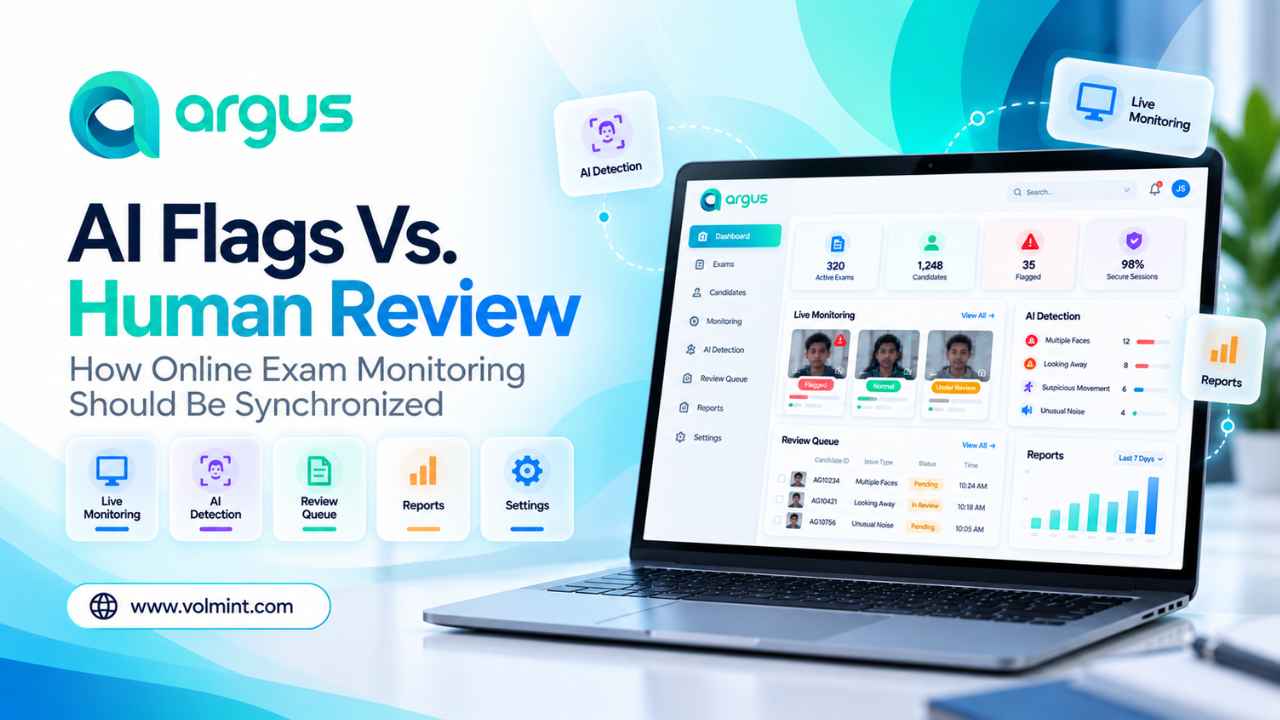
Remember, technology is used to minimize workload and automate repetitive tasks, not to replace manual efforts. Thus, during online assessments, AI detects and flags potential violations during the exam, but a human proctor is important to review the event based on evidence and take necessary action.

Sometimes AI flags normal behavior as a potential violation that harms the integrity of the examination, which is known as a false AI positive in proctoring. Sometimes it misses the potential violation, which is known as a false AI negative in proctoring. In both cases, a human review is important to check whether the flag is accurate or inaccurate to take fair decision and secure online examination.


What Are the Limitations of AI Exam Monitoring?

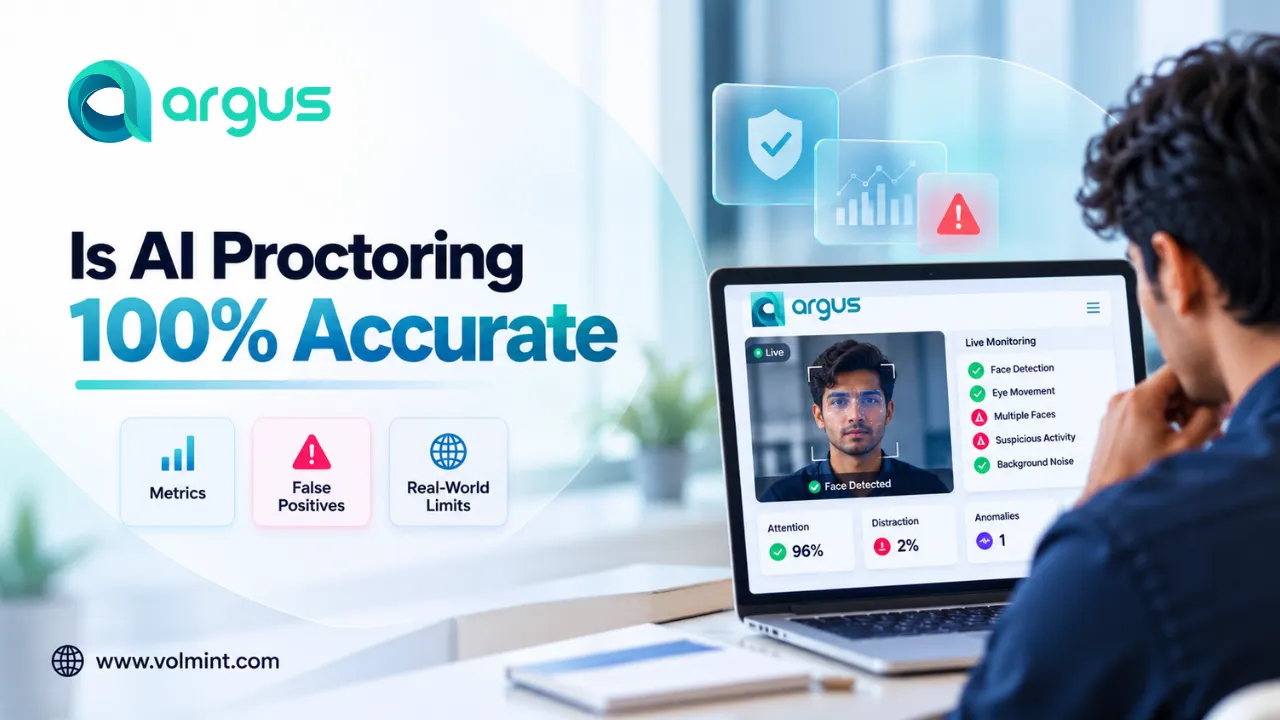
With the growing demand for online assessment, AI Exam proctoring has become the demand of the day to conduct a safe, secure, and scalable online examination. However, it has some technical, contextual, and operational limitations. Let’s understand:

Can AI Proctoring Detect Every Type of Cheating?

No. AI proctoring can only detect or flag behaviors and events supported by its design, available inputs, and detection capabilities. It is advisable to opt for a system that combines appropriate technologies with well-designed exam questions, clear rules, and secure procedures.

Can AI Understand Candidates' Intentions?

Not reliably in every situation. A system may identify repeated movement or an unusual event without knowing whether the candidate was distracted, experiencing a technical problem, or attempting to break an exam rule.

Can Technical Problems Affect Monitoring?

Yes. Poor networks, unsupported devices, permissions, browser capabilities, and power interruptions can affect monitoring.

Can AI Proctoring Create Privacy or Accessibility Concerns?

Yes. Webcam footage, facial images, audio, and activity records can raise privacy concerns. Monitoring requirements can also create difficulties for candidates who need accessibility accommodations or who have limited access to suitable devices and testing environments.


Conclusion

AI Exam Monitoring gives institutions another way to manage online examinations smoothly by analyzing selected signals and highlighting suspicious events that require human assistance. Opting for reliable AI proctoring software is not about seeking what it can detect, but about how it performs and its limitations. For universities, colleges, certification bodies, and recruitment teams, the most responsible approach is to combine appropriate technology with clear examination policies, privacy safeguards, human oversight, and ongoing evaluation.

Frequently Asked Questions

More Blogs

Contact Volmint Technologies

Let's Connect for Technological Brilliance

Reach Out to Volmint Technologies Today and Unleash the Power of Customized Solutions Tailored to Elevate Your Business.

Contact Us
Footer Background Circle
AI Exam Monitoring: How It Works, Signals & Limitations