With growing demand for flexible online examinations, many universities and certification institutions are adopting AI proctoring software to conduct secure and cheat-free online tests. AI exam monitoring can help to identify unusual activities and flag them based on the predefined parameters and the software’s capabilities to minimize manual workload. However, it has its own technical and contextual limitations that require human review to maintain online exam integrity.
AI-powered online exam monitoring software uses artificial intelligence and related technologies for suspicious activity detection, but it doesn’t mean that every flag indicates an exam malfunction or cheating. Well, in that case, a human proctor can intervene to check the event and, based on the evidence, mark it as a valid or invalid flag to offer utmost fairness during the exam.
Whether you are a university, college, or any educational institution conducting online assessments, combining automated monitoring with human oversight can support a more consistent and fair examination process.
Before heading to an AI-based remote proctoring software, understanding what AI flags mean, how human reviewers should access them, and when further investigation is necessary is important to choose wisely.
This blog has all your queries; scroll down to learn more!
Why is a Human Reviewer Important in Online Exam Monitoring?
AI can flag suspicious activities and irregularities during the exam based on the supported signals. However, it doesn’t mean that every alert is valid and acceptable. In those cases, a Human Reviewer helps determine whether an AI-generated alert represents a genuine examination concern, a harmless action, or a technical problem. It adds context that automated detection may not be able to establish independently.
A human proctor can examine the complete event, check relevant footage & evidence, and apply the institution’s rules before recommending further actions.
Sometimes poor network connection, technical issues, or normal human behavior such as blinking multiple times, reading authorized material, or changing posture can trigger AI alerts. A human review will check the incident, timestamps, communicate directly with the student, and make a fair decision.
Human Reviewer must follow these steps during an AI alert:
- Evidence-based assessment: Examine the available information before concluding.
- Consistent decision-making: Apply documented rules to comparable situations.
- Clear escalation: Refer uncertain or serious cases for additional investigation.
- Candidate appeal: Provide an appropriate way to challenge disputed decisions.
- Audit records: Document the review outcome and any action taken.
What is The Difference Between AI Flags and a Human Reviewer?
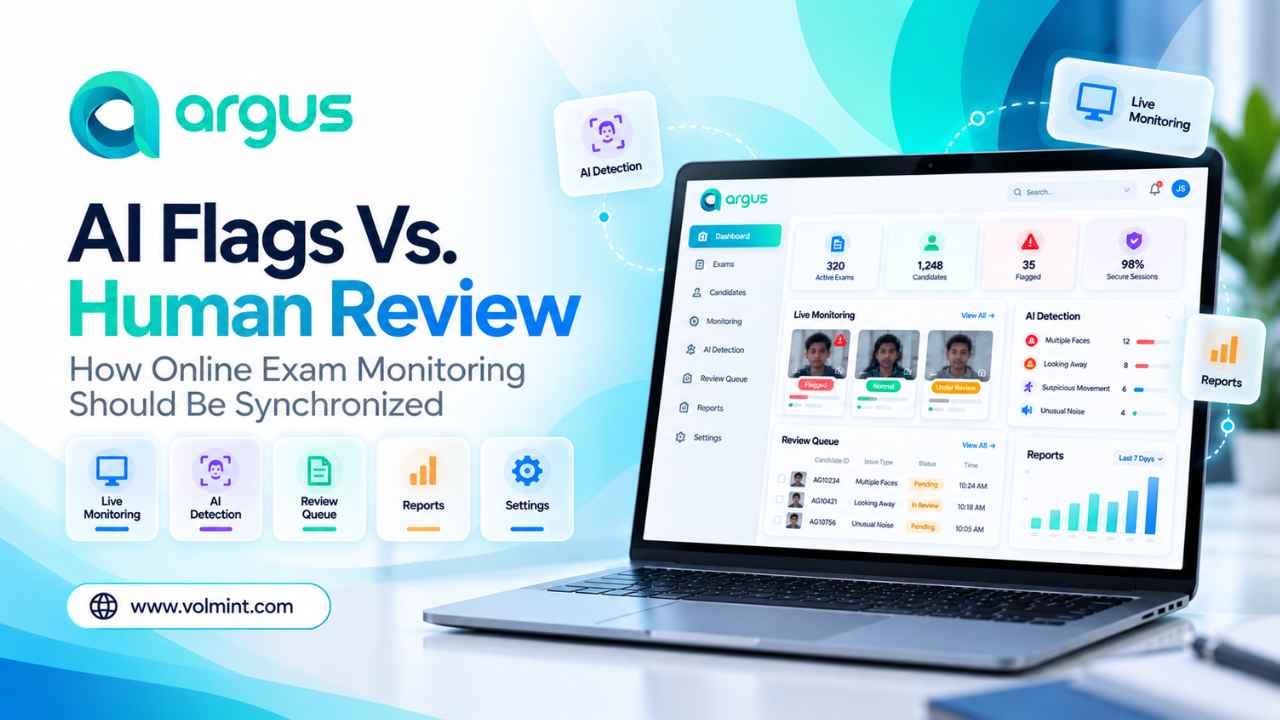
AI flags identify events that may require attention, while human review evaluates those events in context. Both serve different purposes in online examination monitoring.
|
AI Flags
|
Human Reviewer
|
|
Identify events that meet configured alert criteria
|
Interpret events using available evidence
|
|
Help prioritize potential concerns
|
Assess whether an investigation is needed
|
|
Operate based on the predefined rules set by the institutions and system caliber.
|
Apply examination policies and contextual judgement
|
|
May generate false positives and false negatives
|
Can identify alternative explanations, but may also make mistakes
|
Conclusion
AI flags and human review play complementary roles in online examination monitoring. AI can identify events that deserve attention, while human reviewers assess their meaning and determine whether further action is justified.
For universities, certification bodies, and recruitment teams, the priority is to choose online proctoring software that supports accurate monitoring, transparent reporting, and fair review procedures.