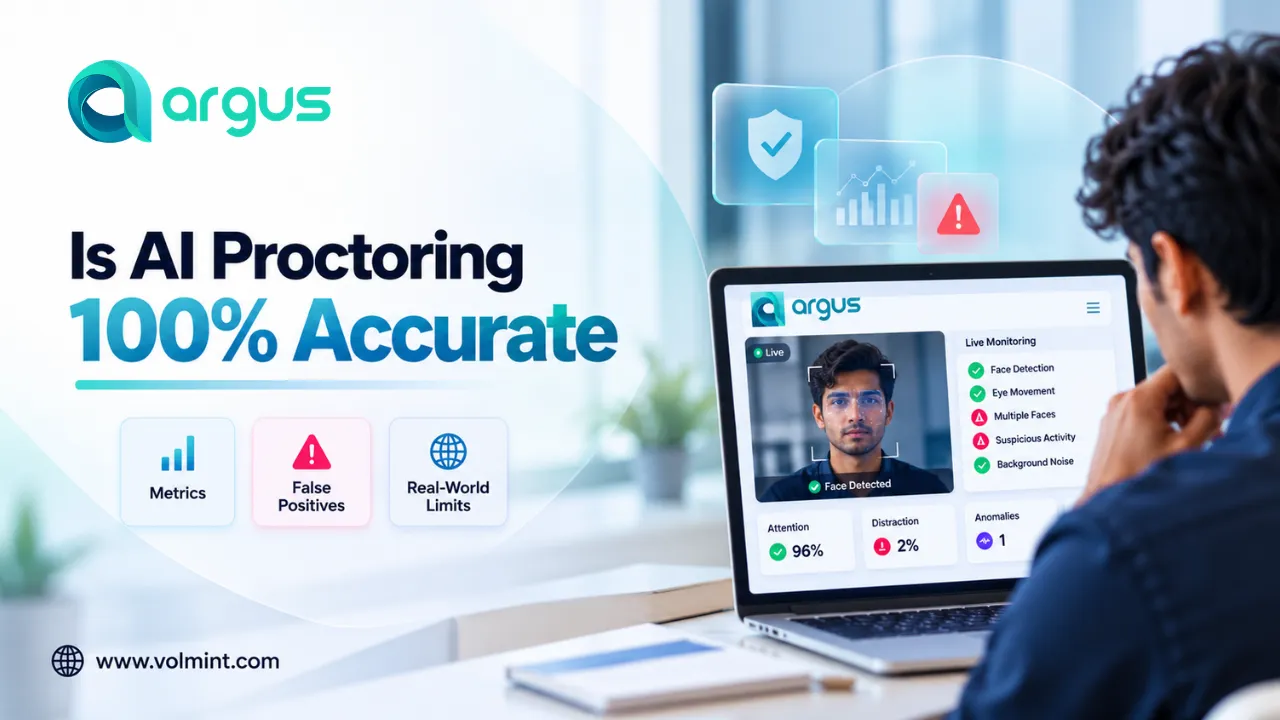
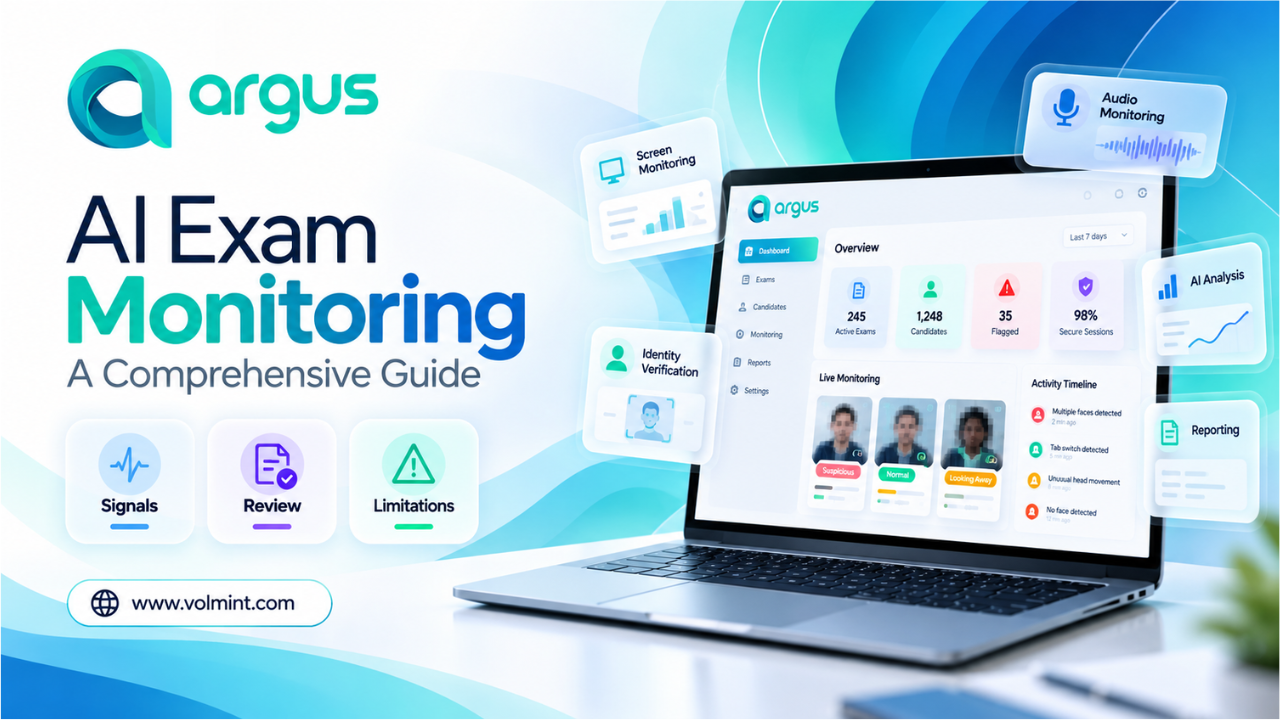
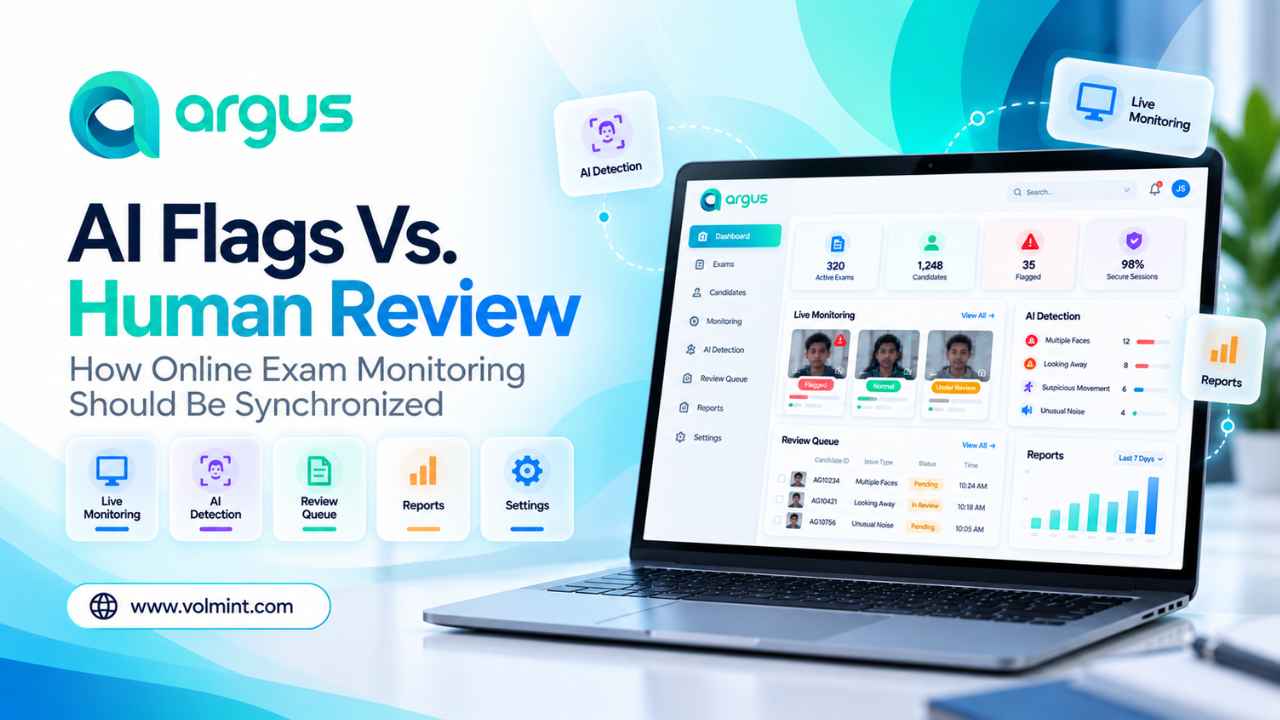
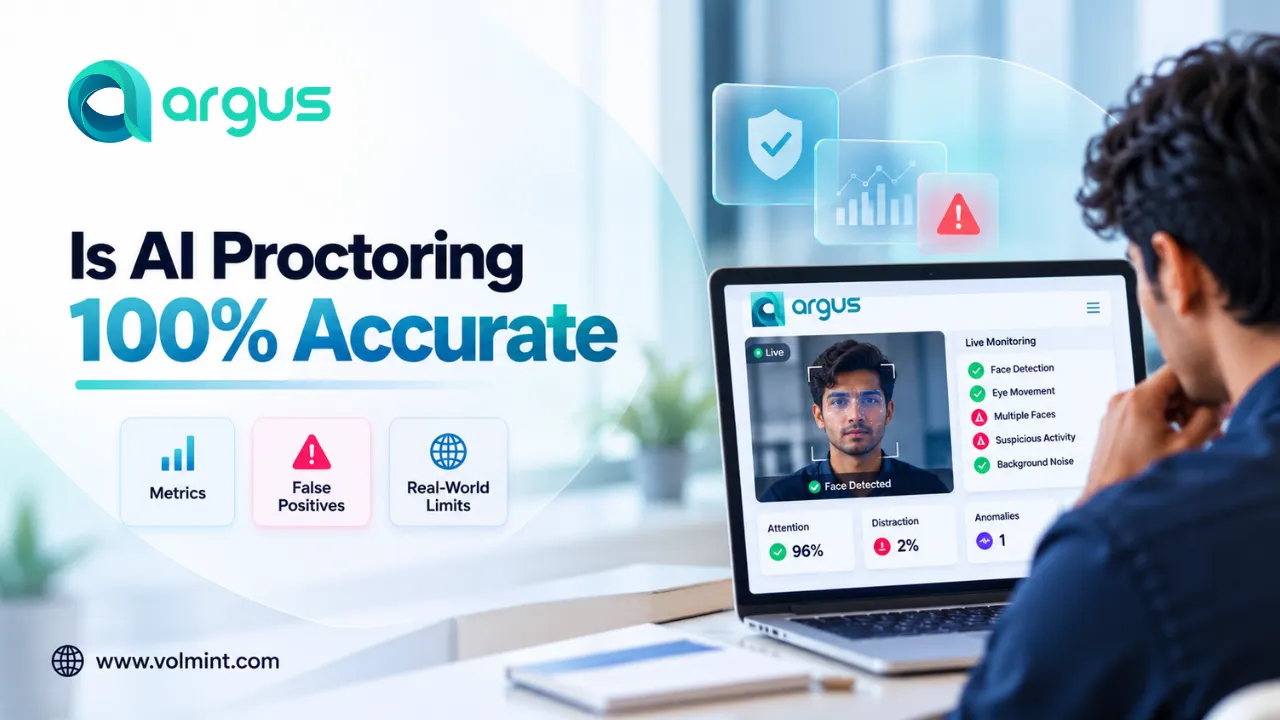
To maintain the integrity of an Online Examination, many educational institutions such as universities, colleges, and certification providers are counting on AI Proctoring software. Through AI proctoring, they can conduct and monitor online assessments, identify suspicious activities, verify students, and review potential exam violations.
But how accurate is it? AI exam monitoring uses artificial intelligence and similar technologies to track students' behavior during the online examination and flag suspicious activities, using supported signals, such as webcam and microphone. Well, the accuracy of AI exam Monitoring Software depends on the system configuration, how it is designed, testing results, the conditions in which it can operate, and, most importantly, how it triggers alerts and is evaluated.
While judging the AI proctoring accuracy, using a single percentage is not enough. Institutions should consider other important factors that include false-positive rates, missed detections, precision, recall, and performance under real exam conditions. Also, how to understand the role of the human reviewer and the steps they must take during the exam.
What Does AI Proctoring Accuracy Mean?
AI Proctoring Accuracy indicates how reliably an online proctoring software works and identifies events that require immediate review during online tests. Based on the system, these events might include facial expressions, multiple people on one screen, unexpected audio, or restricted browsing activity.
However, detecting an event or triggering an alert does not mean that the student is cheating. Sometimes normal human behavior or technical limitations may trigger exam violation alerts, even if there is not misconduct has happened.
It is therefore important to distinguish between two things:
- Detection Accuracy: How well the online assessment platform identifies the event it was basically designed for.
- Decision Accuracy: How reliably the overall process determines whether the event represents an actual rule violation.
What Are the Main Limits of AI Proctoring Accuracy?
AI Online exam monitoring software works based on technology, and it does have some limitations.
AI may not understand the intent clearly.
Looking away from a screen may be harmless, while some forms of misconduct may not produce obvious visual or audio signals.
Test Conditions Affect Performance.
Results obtained under controlled conditions may not transfer directly to students using different devices, internet connections, lighting, or physical environments.
Performance can vary across groups and situations.
Overall results may hide differences in face detection, alert frequency, or error rates across demographic groups.
The system may identify a possible concern, but determining whether misconduct occurred requires relevant evidence and the exam's stated rules.
How Can Institutes Evaluate AI Proctoring Accuracy Before Choosing a Software?
Universities, certification bodies, and recruitment teams can use a practical evaluation checklist before adopting an online assessment platform.
- Ask for metric-level results
- Check test methodology
- Access realistic conditions
- Review performance across groups
- Confirm human review capabilities
- Monitor performance after deployment
Conclusion
While evaluating AI Proctoring Accuracy, using a single performance metric is not enough, but considering other relevant factors that plays part in an online exam monitoring. Choose the system that detects flags with accuracy; avoid false positives and negatives; identify valid violations, not miss potential violations, and perform well under realistic situations.
Choose a highly relevant, secure, scalable AI proctoring software that empowers your institution’s online exam monitoring and offers meaningful support.