From platform configuration to AI-Based monitoring and expected technical challenges, institutions must ask these questions before deciding while exploring a scalable online examination system.
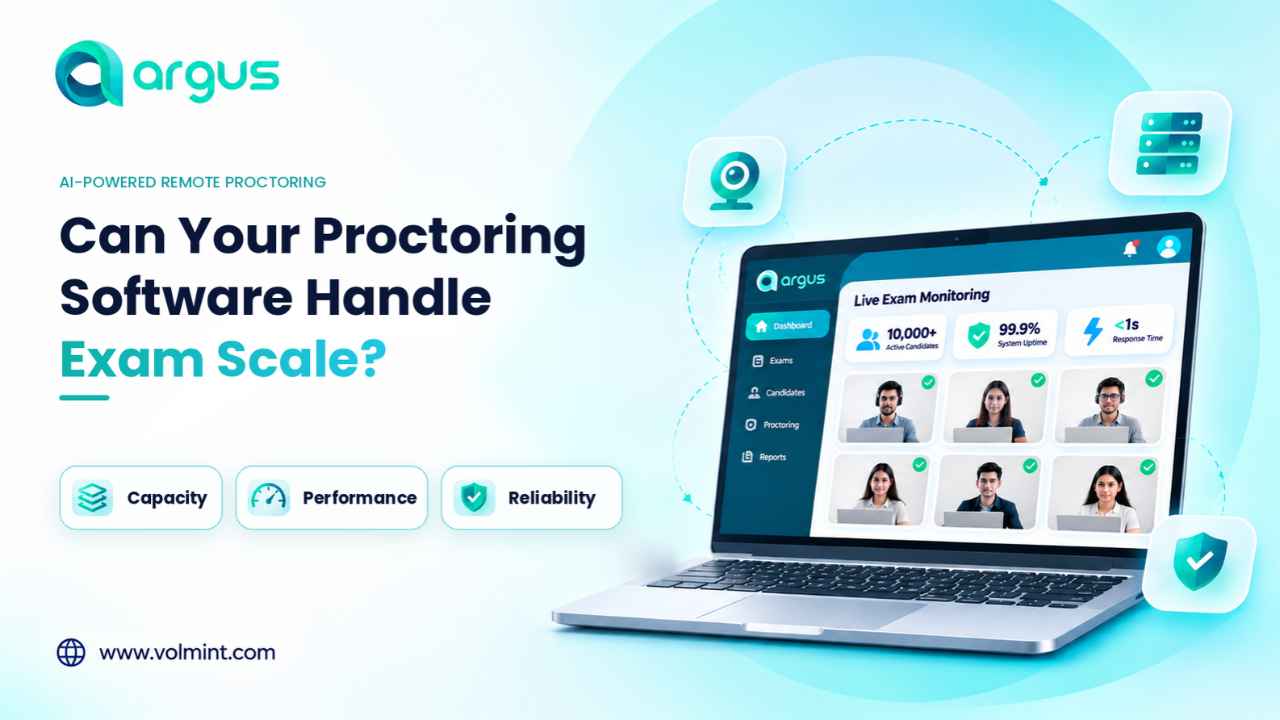
Question 1: Can the Platform Support the Required Number of Concurrent Candidates?
The first step is to understand how many candidates the software can support at the same time. Whether it is about conducting an assessment for thousands of students at the same time across different locations, or organizing multiple assessments simultaneously for different departments, courses, certifications, or programmes, in both situations, the number of concurrent sessions can influence system performance.
Question 2: How Does the Platform Perform During Peak Examination Hours?
A platform can work smoothly with 100 students, but may collapse when thousands of students attempt to log in at the same time. Even a short delay can create difficulties; therefore, peak examination periods can create additional demand on authentication and reporting infrastructure.
Question 3: Does Software Support Different Devices?
During the online examination, candidates may use different devices or operating systems. Thus, the system must support different devices and configurations for smooth operations.
Question 4: Does AI-Based Monitoring Reliably Work at Scale?
An AI-proctored system helps to identify events during the examination and automate operations. It may generate false AI alerts. However, enabling monitoring features does not automatically improve examination reliability. Institutions should understand how these functions perform under different circumstances and whether the alerts are genuine.
Question 5: Can The System Handle Network Interruptions?
Internet connection and device configuration are some of the major technical conditions that can impact remote assessments. Candidates may experience networking issues, which can become more difficult to manage when a large number of students are taking an examination simultaneously.
Question 6: Does the Platform Provide Efficient Administration and Reporting?
Large-scale examination management involves more than supervising candidates. Examination teams also need to organize sessions, manage candidate records, review alerts, monitor progress, and prepare reports.
Question 7: Is Human and Live Proctoring Required?
AI can automate selective operations, but in some situations, a human proctor is important to understand the context and take necessary actions. When thousands of candidates are involved, the way a platform supports human proctors and reviewers becomes an important part of operational scalability.
Question 8: What Technical Support is Available During Large-Scale Examination?
No matter how well-designed the platform is, it still requires technical assistance during a large-scale examination. Candidates or even administrators may face several challenges during an online examination. Thus, A platform may offer standard customer support during business hours, but an institution conducting a large examination outside those hours may need a different support arrangement.
Questions to Ask an Online Proctoring Service Provider Before Final Selection
After reviewing the technical and operational requirements, here is the checklist for institutional and online exam providers to ask of the vendors.
|
Area
|
Question to be Asked
|
|
Scalability
|
What is the maximum and minimum tested candidate capacity?
|
|
Performance
|
How does the platform perform during the peak examination hours?
|
|
Compatibility
|
Can the system be operated through several devices?
|
|
AI Exam Monitoring
|
How are the alerts generated, and what is their reliability?
|
|
Human Oversight
|
Does the platform support live proctoring?
|
|
Security
|
How are candidate information and examination recordings protected?
|
|
Cost
|
What is the total cost, and what factors can affect the budget?
|
Final Thoughts
Evaluating proctoring software at exam scale requires more than checking the number of candidates a platform claims to support. Institutions must understand how the system performs during peak examination periods, whether it supports different devices and network conditions, how effectively it manages monitoring activities, and whether examination teams can handle alerts and reports without unnecessary operational complexity.
The best approach is to evaluate the software against actual examination requirements, request evidence from the vendor, and conduct a controlled pilot before making a final decision.