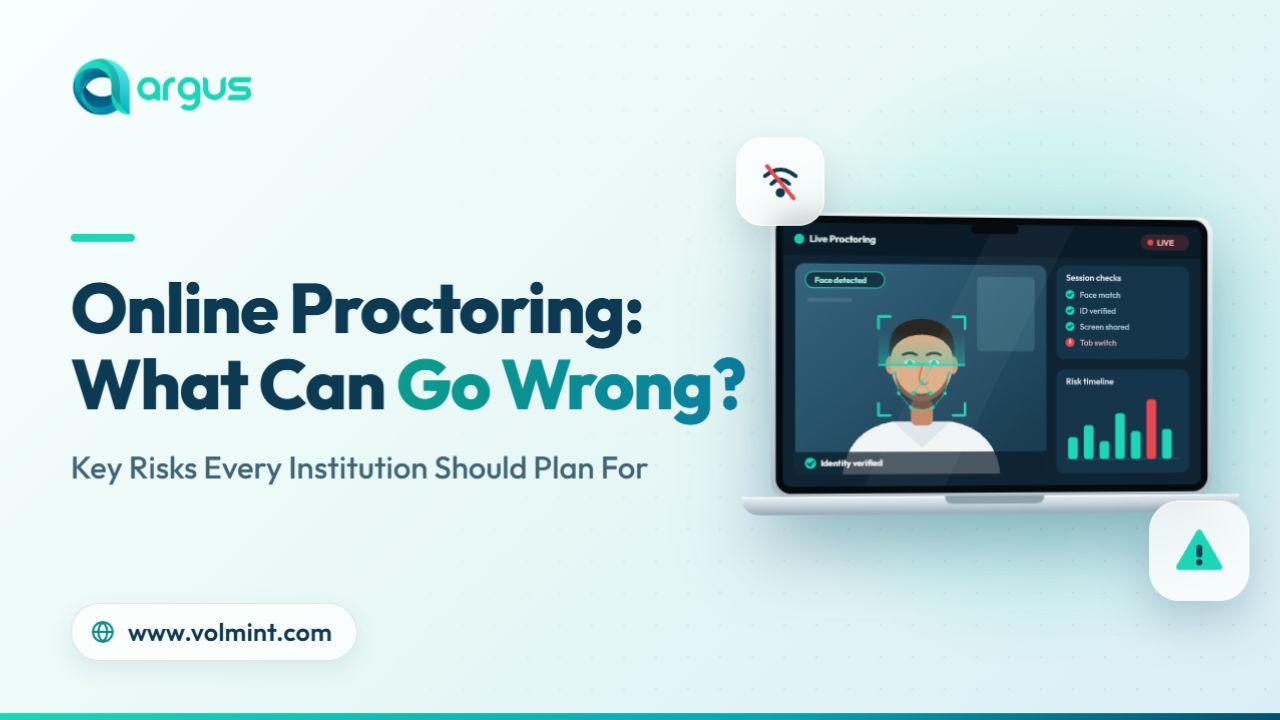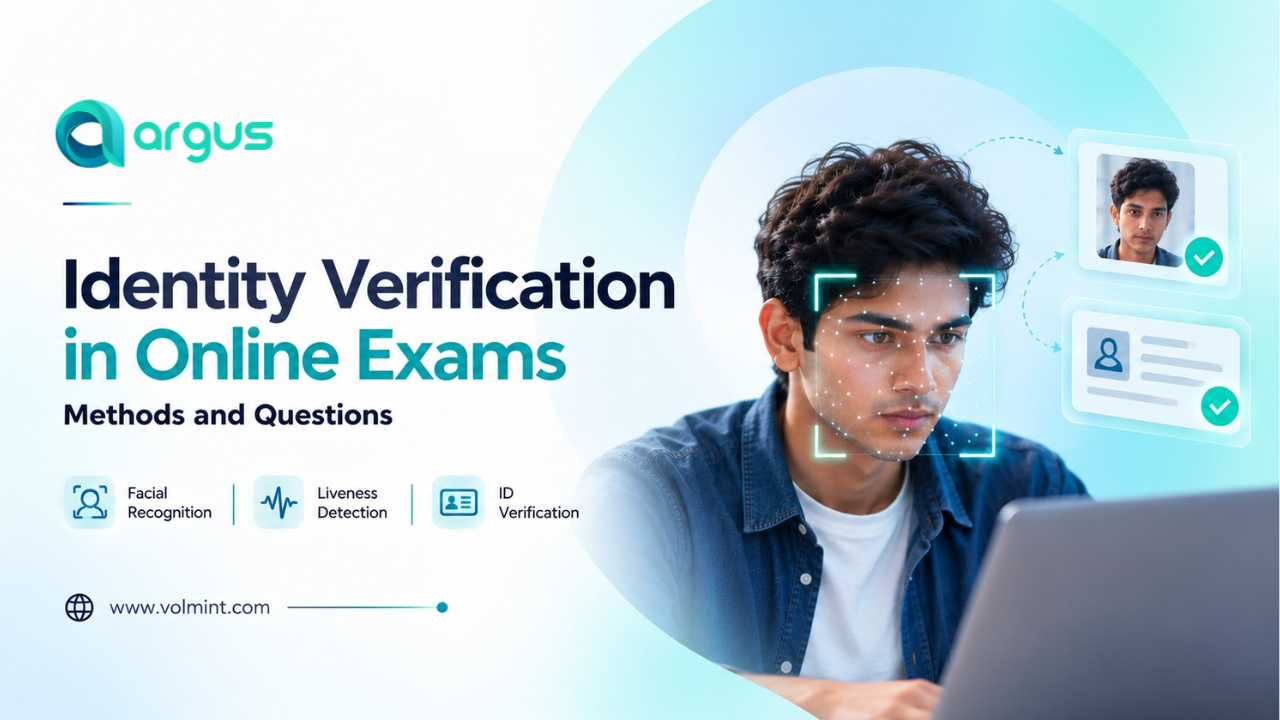
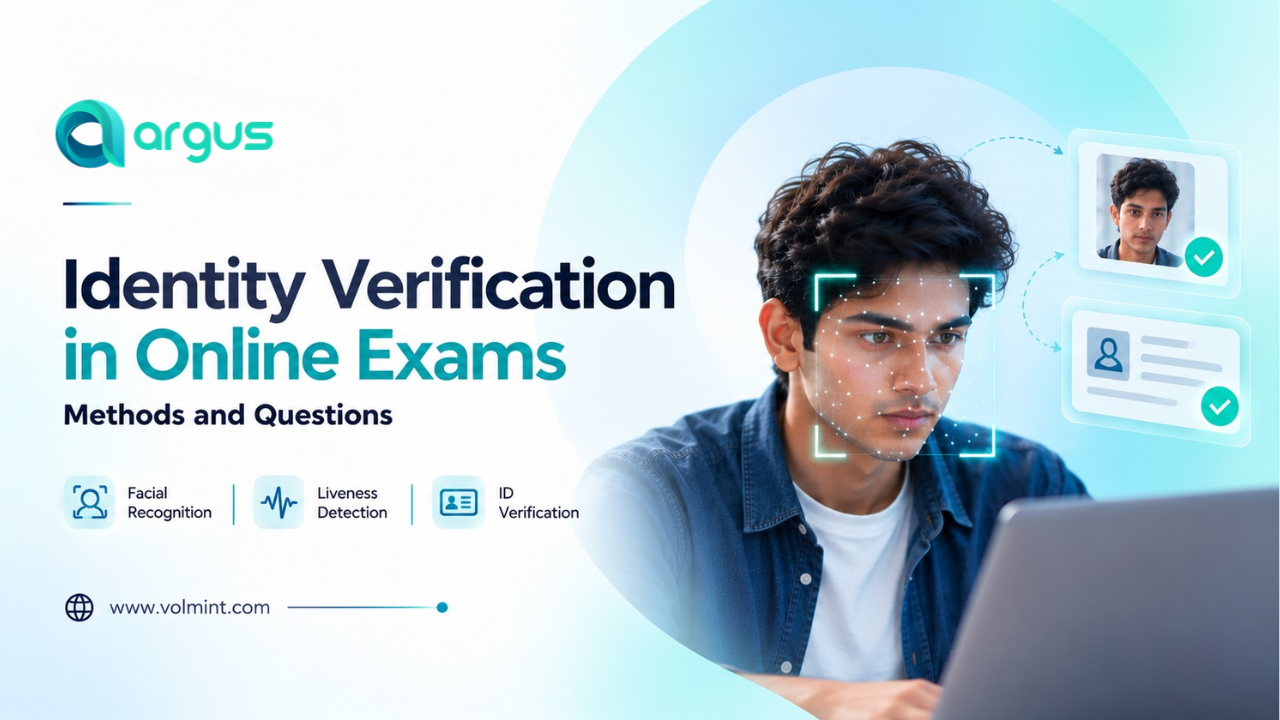
For an online examination, Identity verification is a critical step and includes multiple checks, such as biometrics, facial recognition, ID verification, and more, depending on the online proctoring software's capabilities. The system may ask several questions to verify the candidate's identity, ensuring the prevention of exam malpractice and impersonation.
Online examination has become one of the most preferred modes for remote learners who have enrolled in flexible courses or programmes. Universities and certification providers use online proctoring to ensure candidates acquire the required knowledge and skills during the program. Therefore, candidate identity verification plays an important role in ensuring online exam security and smooth functioning.
ID verification and facial recognition in online exams help to confirm that the registered candidate is taking the exam and follows guidelines, reducing the risk of impersonation and unauthorized participation. Depending on the online AI proctoring software and the requirements of the conducting body, there are several methods involved, such as government-issued ID checks, facial comparison, One-Time Password (OTP), and live verification by a human proctor.
No single method is enough to prevent exam malpractice. Thus, online assessment conducting bodies rely on an AI + Human Hybrid Proctoring System to maintain exam integrity. In this blog, we will explore some of the most common methods and questions asked for identity verification during online tests.