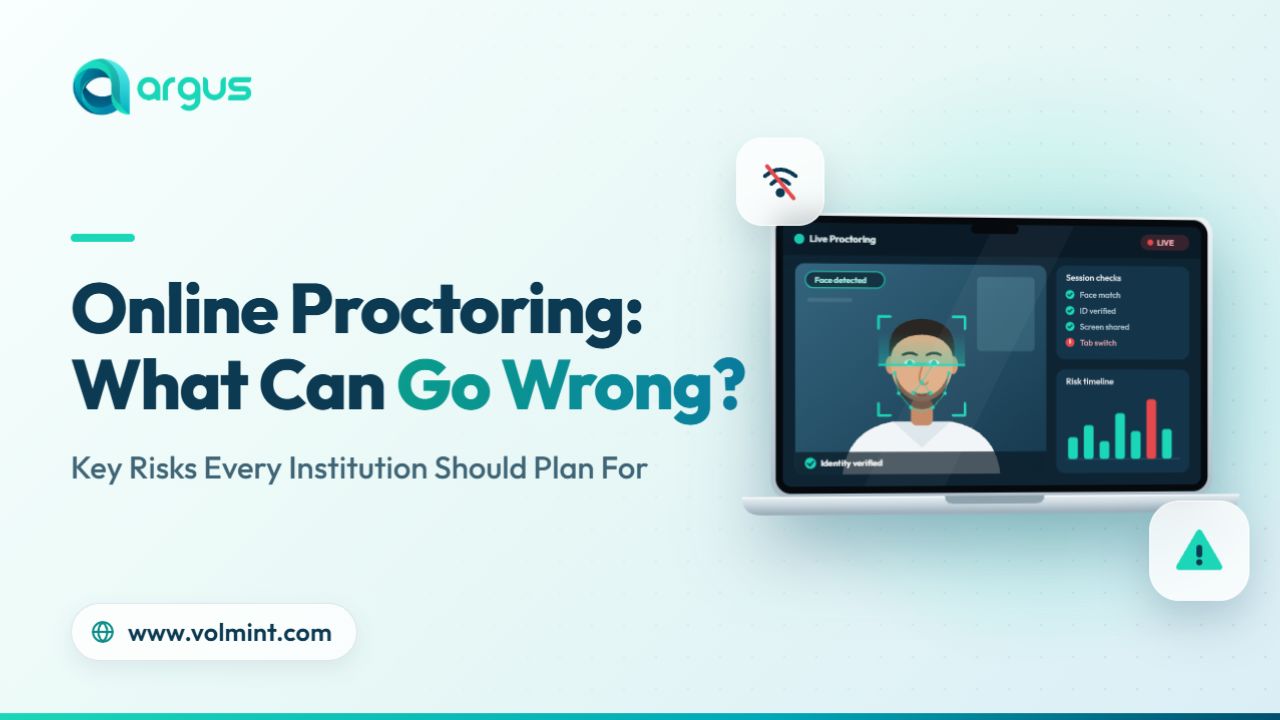
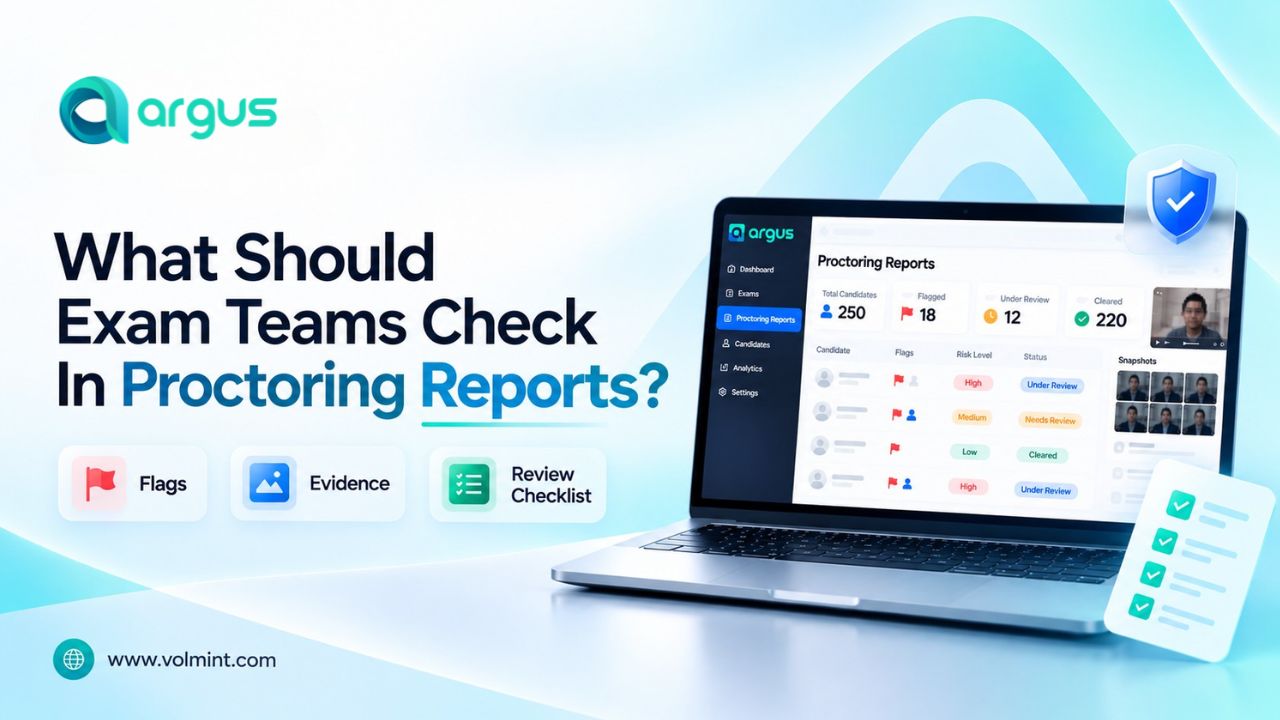
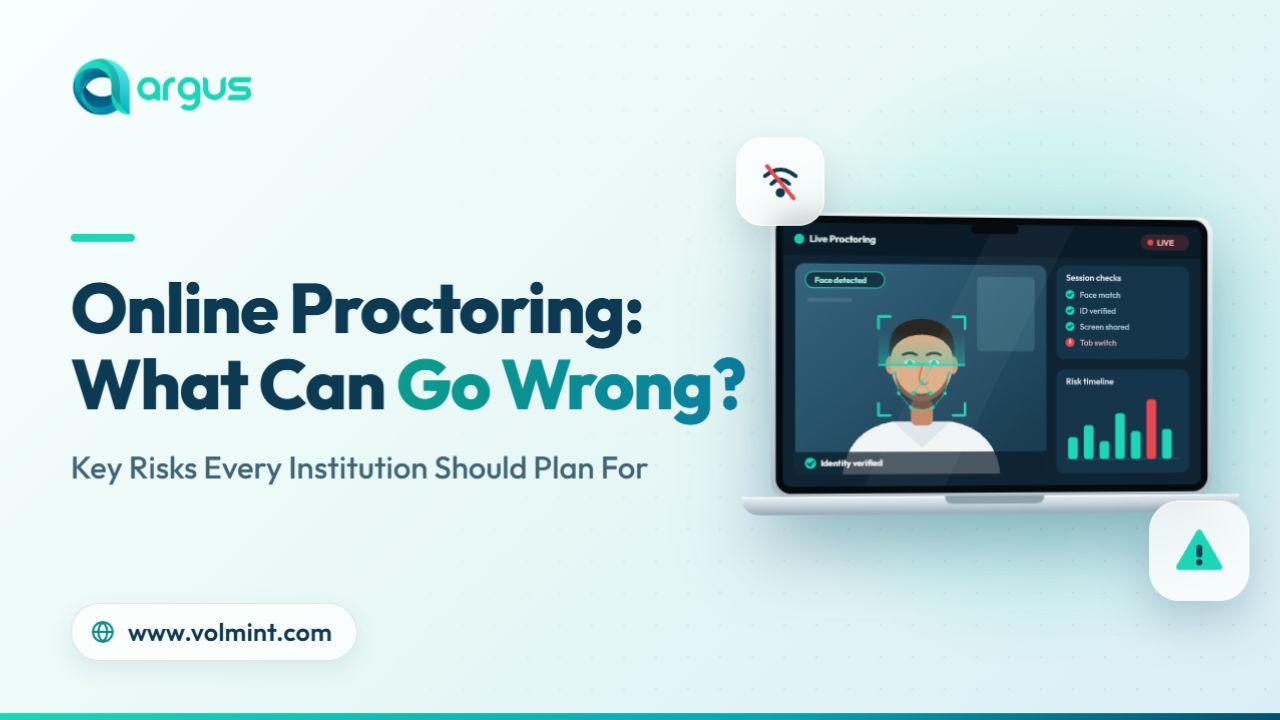
During online proctoring, the examination conducting body faces several challenges, including technical difficulties, easy access, fairness, data security, false-positive alerts, operational readiness, and candidate experience. Therefore, institutions must run a test, provide clear instructions to candidates, address technical failures, and choose online proctoring software that helps overcome online exam challenges for a smooth proctoring experience.
Online proctoring helps universities, certification providers, and recruitment teams to conduct and manage online assessments. However, conducting a fair and smooth remote examination is not just about choosing online proctoring software, but implementing it successfully to ensure an engaging and seamless user experience. Institutions must prepare for technical failures, candidate accessibility needs, privacy concerns, false-positive alerts, operational costs, and the workload involved in reviewing exam incidents.
To remove AI Proctoring challenges, institutions should plan for what can go wrong before an exam begins – not just how online proctoring software is expected to work, assuming everything goes as expected.
What are the Main Challenges of Online Proctoring?
For educational institutions and certification providers, an online examination has become the most important asset for assessment. Thus, they are actively choosing a remote exam monitoring system that helps them conduct tests fairly and securely. However, it may have several obstacles that should be addressed before taking it to real-world use.
Online Proctoring Challenges generally fall into six areas: accessibility, technology, privacy, flag accuracy, operational readiness, and user experience. If any of them are not addressed properly before the exam, it may harm the integrity of the online exam.
|
Challenge
|
What Should Institutions Plan For
|
|
Technical Failures
|
Device incompatibility, weak internet connection, camera or microphone issues, and platform outages
|
|
Online Assessment Accessibility
|
Assistive technology compatibility, approved accommodations, and differences in candidates' testing environments
|
|
Privacy & Data Security
|
Clear data policies, controlled access, secure storage, and defined retention period.
|
|
False-Positive Alerts
|
Human review, evidence checks, consistent criteria, and an appeal process
|
|
Operational Readiness
|
Support capacity, staff training, integration testing, cost planning
|
|
Candidate Experience
|
Clear instructions, practical tests, transparent rules, training, and manageable setup measurements
|
Institutions must prepare themselves to overcome online exam monitoring challenges. However, risk depends on the chosen AI proctoring software, assessment stakes, number of candidates, and level of monitoring required.
5. What Operational Challenges Should the Exam Team Expect?
Even when the technology works as intended, institutions need people, procedures, and resources to run the examination successfully. Institutions must plan for the full exam lifecycle that includes configuring settings, test integrations, training staff, and publishing candidate instructions.
Conclusion
Online proctoring can help institutions supervise remote assessments, but successful implementation requires more than software deployment. Technical reliability, accessibility, privacy, alert accuracy, staff readiness, and candidate experience all influence how effectively the system works in practice.
The most useful preparation happens before exam day: test the technology, communicate expectations, train reviewers, establish incident procedures, and decide how evidence will be assessed. Institutions should also review whether proctoring is necessary for each assessment and select controls proportionate to the risks involved.