
logo
HomeBlogs

Hybrid vs. Automated Proctoring: Which Workflow Fits Your Online Exams?

Hybrid vs. Automated Proctoring: Which Workflow Fits Your Online Exams?

Understand the differences between hybrid and automated proctoring, including how each workflow operates, handles exam alerts, and supports online assessment security. Compare their advantages, limitations, scalability, and human oversight to choose the right proctoring approach for your institution.

Hybrid vs. Automated Proctoring: Which Workflow Fits Your Online Exams?

Hybrid proctoring combines AI assistance with human oversight or real-time intervention, while Automated proctoring uses artificial intelligence and similar technologies to monitor online exams. Compare hybrid exam monitoring with automated proctoring to understand the differences in supervision, scalability, exam integrity, and candidate experience.

Nowadays, online examinations have become increasingly important, particularly for universities, colleges, and certification bodies conducting remote assessments. Therefore, choosing the right remote proctoring software is necessary based on their unique ecosystem to maintain integrity and ensure smooth operation.

While opting for online exam monitoring software, the challenge is not simply to monitor candidates remotely, but to understand the process involved, how the system works, how it finds potential violations, and how to evaluate performance.
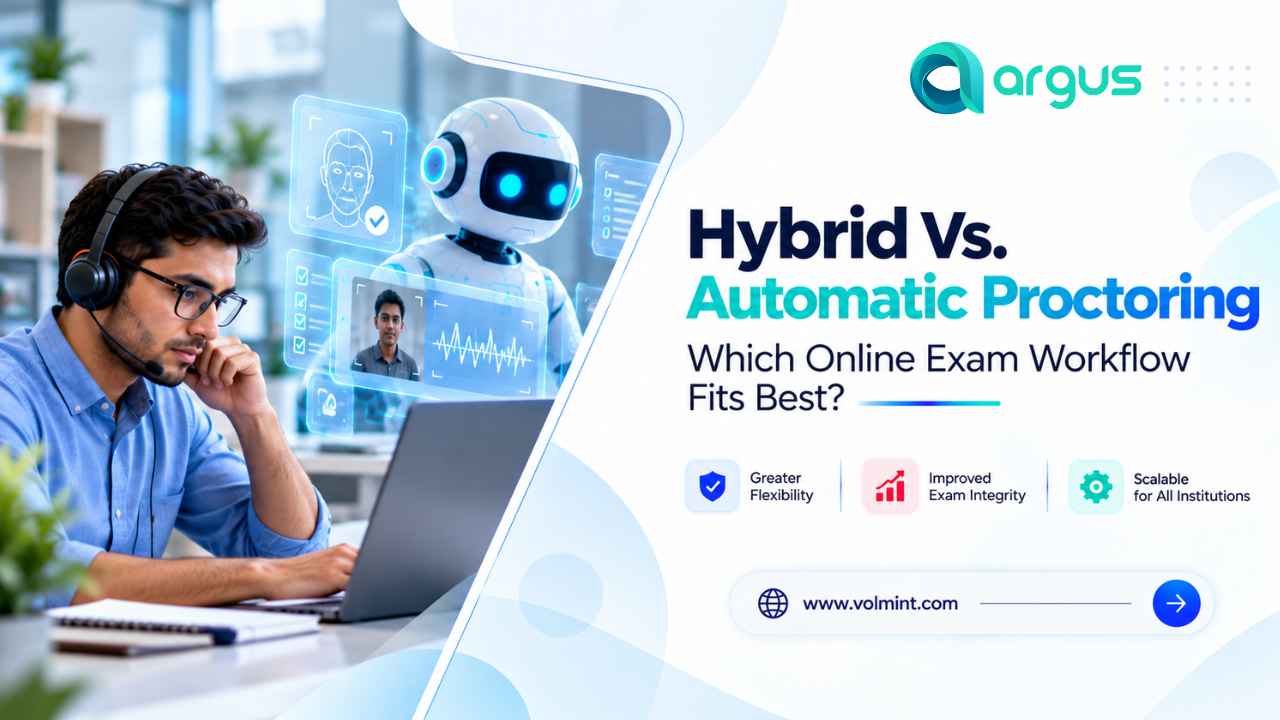
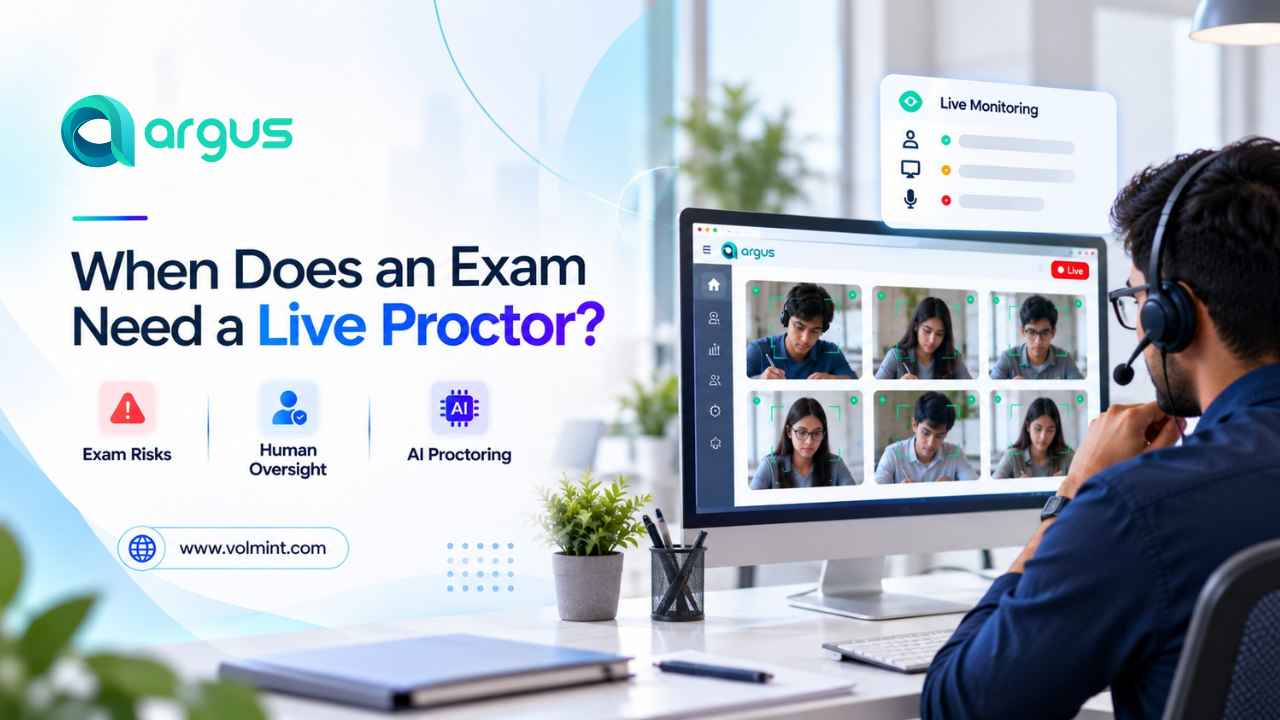
Automated workflow Vs. Hybrid Workflow: Which one to choose?

  • An automated workflow uses software to monitor exam sessions and suspicious activities during the exam that may require immediate attention.
  • Hybrid workflow combines AI proctoring with Human involvement that includes flagged reviews and supervising selected events.

 To choose the best one among them, you need to understand your online examination needs first, such as the importance of the exam, number of candidates, supervision requirements, and other available resources.

This comprehensive guide, based on hybrid Vs automated proctoring, explains how each workflow operates and outlines what an organization should consider before opting for an online exam proctoring software.

What is the Difference Between Hybrid and Automated Proctoring?

While opting for online exam monitoring software, understanding the difference between them is important to choose wisely.

Automated Proctoring

Hybrid Proctoring

Automated proctoring primarily relies on software, using artificial intelligence and similar technologies to monitor exam sessions, apply configured rules, and flag activity that requires immediate assistance. Depending on the AI proctoring software, it may use a webcam and microphone as supportive signals to analyze activities.

Hybrid Proctoring combines AI assistance with human involvement to supervise the online exam process. Based on the predefined parameters and system configuration, the software may identify potential violations for human review to make fairer judgment.


The term hybrid proctoring can describe different arrangements. Some systems combine live human supervision with AI monitoring; others record sessions for later human review. Organizations should therefore check exactly what a provider means by a hybrid workflow.

Automated Proctoring Workflow – How Does It Work?

An automated proctoring software helps organizations and certification bodies to identify, track, and conduct online examinations without human intervention or minimal human invigilation. The software uses predefined parameters set by the exam-conducting body and platform configuration to analyze events.

How Does Automated Proctoring Workflow Work?

  • Step 1: Candidate Verification – Before the exam begins, the system uses student information to verify the identity, ensuring the right person is taking the exam.
  • Step 2: Exam Environment & Device Checks – The platform may check the candidates’ devices, including the webcam and microphone, internet connection, browsing settings, and other technical requirements.
  • Step 3: AI-Powered Exam Monitoring – The system analyses the selected system during the exam, such as frequent absence from the screen, multiple faces on the screen, unusual audio, and surrounding context.
  • Step 4: Alerts, Logs, and Reports – During the online assessments, if any event matches potential violations, the system sets an alert, timestamp, recording segment, and event report for further review.
  • Step 5: Post-Exam Review – To maintain exam integrity and a fairer process, a human proctor will review the flags post-exam or during the exam (based on AI Proctoring Software) to understand the context.

Hybrid Proctoring Workflow – How Does It Work?

Hybrid proctoring combines the advantages of AI proctoring with human involvement. It is highly relevant for high-stakes exams. The AI+Human proctoring software helps organizations to process many exam sessions but also want a defined procedure for examining potential violations.

How Does Hybrid Proctoring Workflow Work?

  • Step 1: Registration and Identity Checks – Depending on the exam requirements, a human proctor may verify the student's identity, or an AI handles the initial process to ensure the registered person is taking the exam.
  • Step 2: Automated Monitoring During the Exam – AI-based online exam monitoring software observes student behavior, using supportive signals that include webcam, microphone, and browsing data.
  • Step 3: Event Flag – Based on the potential violation rules, the system generates flags that require human intervention for further review.
  • Step 4: Human Review – A trained human reviewer examines the available evidence and considers the context to make a fair decision during the online examinations.
  • Step 5: Final Decision - If the evidence raises a concern, the case can follow the institution's established review process. Depending on policy, this may include a second reviewer, an opportunity for the candidate to respond, or an academic integrity investigation.

What are the Advantages and Limitations of Each Workflow?

Both automated and hybrid workflows are the two major methods used for online exam monitoring. However, they have different approaches and are designed for different purposes.

What are the advantages and limitations of automated proctoring?

Advantages

Limitations

It helps to support high-volume assessments

It can generate false alerts due to system limitations.

Follow the monitoring rules continuously

Misjudges normal human behavior as potential violations

Offers timestamps, event logs, and recordings to review the events

Creates unnecessary chaos during the online assessments

Reduces the requirements of human invigilation and saves costs.

May miss potential violations that harm the exam integrity

What are the advantages and limitations of AI+ Human Hybrid proctoring?

Advantages

Limitations

Human reviewers can understand the context and provide fairer judgment

List of trained human proctors, clear procedure, and sufficient time.

Highly supportive for high-stakes assessments

Inconsistent judgments with appropriate guidance.

Allows an authorized human proctor to intervene anytime to analyze the process

Live supervision can also increase staffing requirements.

Creates a clear rule for escalation

May miss potential violations that harm the exam integrity


How to choose an online proctoring software workflow?

Before selecting online proctoring software, assess your operational requirements and define what the system is expected to achieve.

Define the stakes of the exam à Estimate the candidate volume  à Decide where human oversight is necessary à Evaluate detection and review quality à Assess availability and security à Operational cost à Test the workflow

Run a pilot using representative candidates, devices, network conditions, and exam formats. Review alert quality, candidate experience, technical failures, reviewer workload, and the time needed to resolve incidents.

Conclusion: Choose the Workflow That Aligns With Your Assessment Needs

Both automated and hybrid proctoring are used for related purposes. However, their evaluation processes and decision-making abilities may vary. Automated proctoring can be useful for consistent monitoring and high-volume assessments, while hybrid proctoring adds supervision and contextual judgement. Both have their advantages and limitations; understand your assessment goals and choose wisely.

Frequently Asked Questions

More Blogs

Contact Volmint Technologies

Let's Connect for Technological Brilliance

Reach Out to Volmint Technologies Today and Unleash the Power of Customized Solutions Tailored to Elevate Your Business.

Contact Us
Footer Background Circle
Hybrid vs Automated Proctoring: Differences, Workflow & Benefits