During an online examination, a human proctor becomes essential when a candidate requires immediate guidance, intervention, or judgment about a potential rule violation. This is particularly relevant for high-stakes certification exams, professional licensing assessments, and examinations where strict exam procedures are essential.
Is Human proctoring enough? Not really. For high-stakes assessment, relying only on human invigilation is not enough. To automate tasks and maintain fairness, AI + Human Hybrid proctoring software is necessary to provide accuracy and improve exam efficiency.
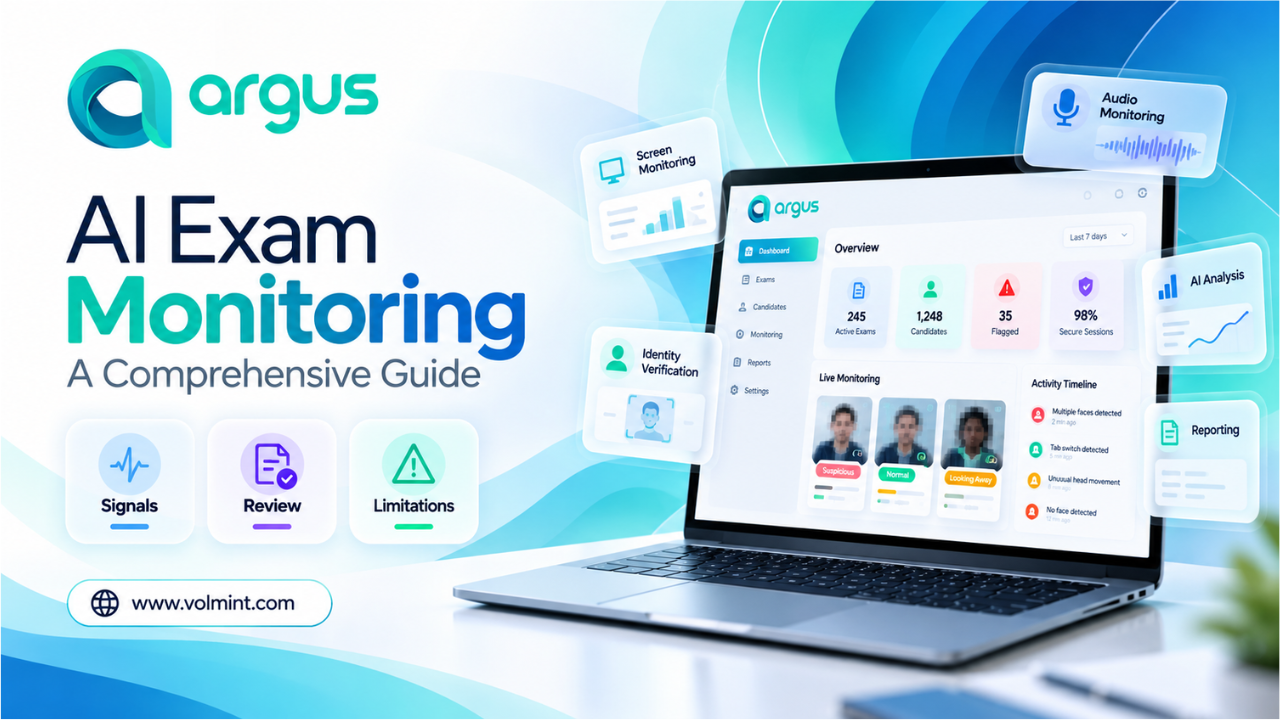
However, not every remote exam monitoring requires a human proctor. Routine quizzes and assessments can work with automated monitoring, recorded sessions, or an AI proctoring system. Universities, colleges, and certification providers must choose a proctoring system that accomplishes their online exam requirements.
What is Live Human Proctoring in an Online Exam?
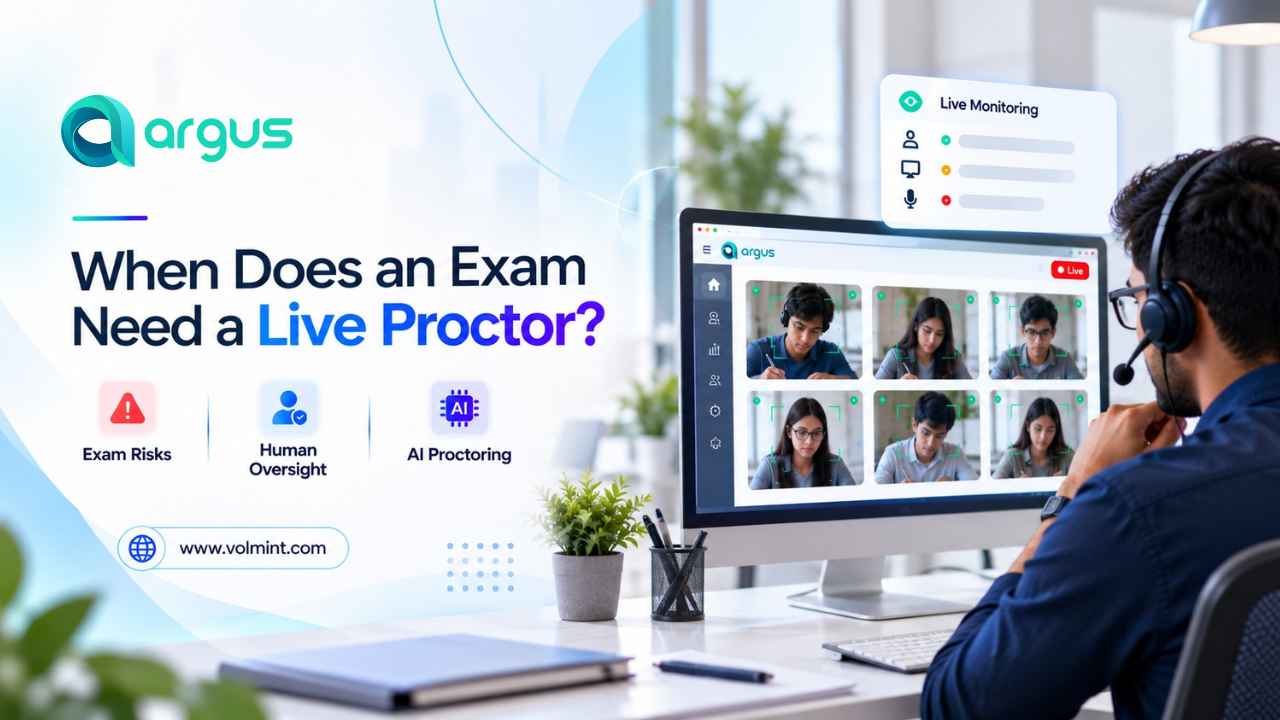
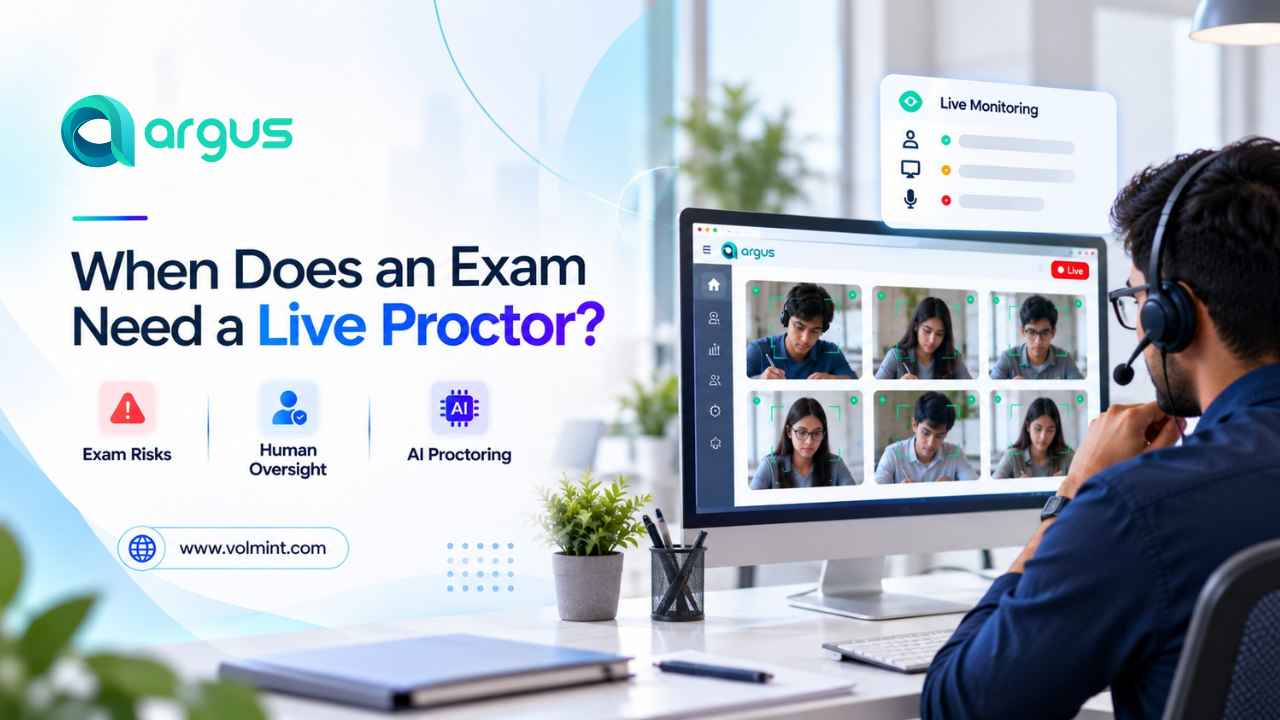
A Live Human Proctor is a trained invigilator who supervises students during an online examination. They use a webcam, microphones, and other monitoring tools to detect suspicious behavior and potential alerts to maintain exam integrity. When required, they communicate with candidates in real time, ask for screen sharing, and can respond to the issues raised by students. Based on the online proctoring software, a human invigilator may:
- Verify candidate identity and check exam requirements.
- Monitor candidate behavior during the assessment, using supportive signals.
- Respond to unexpected interruptions or possible violations, as per the documented rules.
- Provide guidance in case any technical or procedural issues arise.
- Check footage and evidence, and make fair decisions.
- Understand event and proceed them for further review.
Seeing the growing demand for online assessments, universities and institutions are now preferring software that combines AI proctoring with human oversight to improve exam efficiency and integrity.
Live Human Proctoring Vs. AI Proctoring: How Do You Choose?
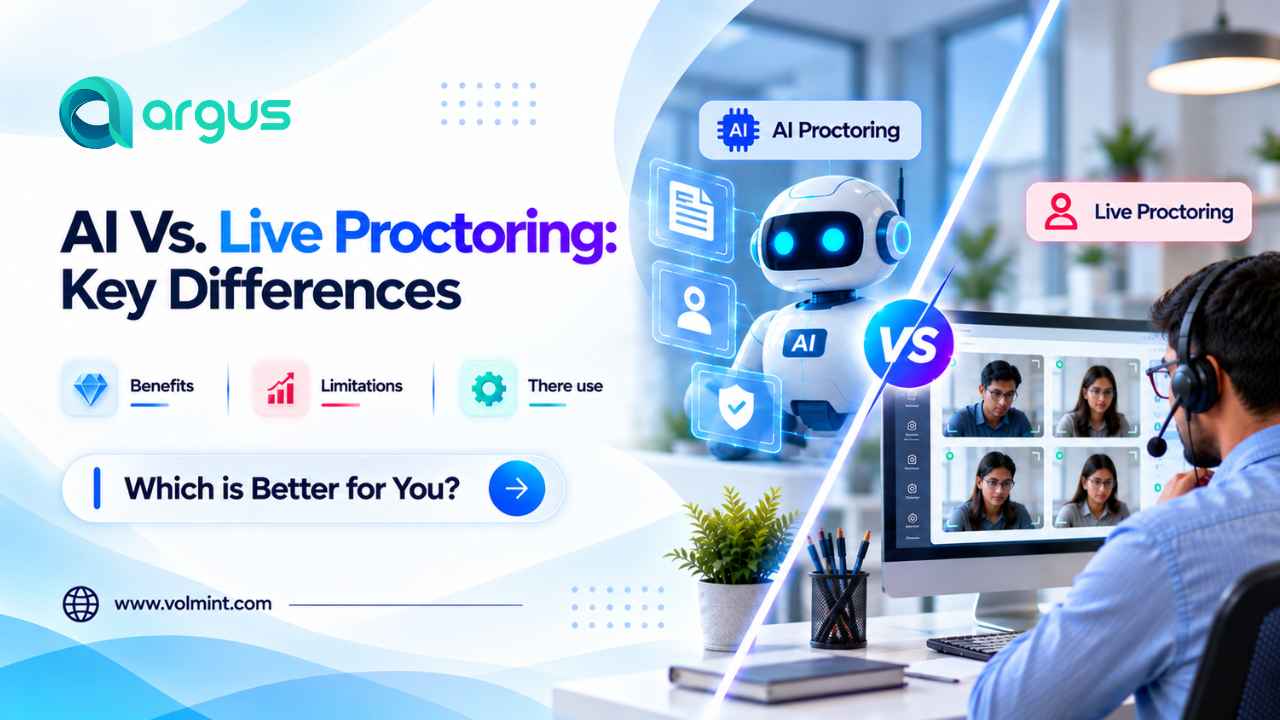
Choosing between Live Human Proctoring and AI Proctoring depends on the online exam requirements. Both are major processes used during remote assessments, but the methods of supervision, verification, and evaluation may vary.
|
Requirement
|
Live Human Proctoring
|
AI Proctoring
|
|
Human response
|
Immediate
|
Depends on the AI proctoring system that includes Live monitoring or not.
|
|
Automated Monitoring
|
Depends on system configuration and features
|
AI Proctoring automates the monitoring process.
|
|
Rule Violation
|
Human review and event understanding
|
May provide False positives that require human assistance
|
|
Staffing requirements
|
Require trained human proctors
|
Minimal human intervention and less staffing
|
|
Reviewing uncertain alerts
|
Can happen during the exam
|
May be handled after the exam or by a hybrid service
|
These are general differences, not guarantees. Some platforms combine AI monitoring with live proctors, while others use automated monitoring followed by human review.
How Can an Institution Decide Whether They Need a Live Proctor?
Choosing the right remote exam monitoring system is important for seamless online assessment. Therefore, institutions must check these points before deciding.
- Assess the consequences: Could an incorrect outcome influence professional qualifications, certification, employment, or advancement?
- Determine potential security threats: Is there a need for authentication, restricted materials, or live intervention?
- Describe the investigation protocol: Which party would look into the matter, and within what time frame?
- Think about the needs of the candidate: Are there any considerations around access, confidentiality, or technology that must be addressed?
- Compare the options against the needs of the test: Live, AI-enabled, recorded, and hybrid proctoring against the needs of the test.
- Develop standardized procedures: Proctors should be trained, incidents recorded, and candidates assessed under standardized guidelines.
Conclusion
A live human proctor is most valuable when an exam requires immediate supervision, direct intervention, or contextual judgment that automated monitoring alone may not provide. For routine, lower-stakes assessments, AI-assisted or recorded proctoring may be sufficient when supported by appropriate safeguards.
The best approach is to match the level of supervision to the exam's risks, follow the relevant rules, and ensure that suspicious activity is reviewed fairly. Effective online exam monitoring should protect assessment integrity without creating unnecessary barriers for candidates.